You Won’t Believe What This Hidden Coastal Town Is Built Into
Nestled along Turkey’s turquoise coast, Kas isn’t just another pretty seaside escape—its architecture will stop you mid-step. I wandered its cobbled lanes expecting sunsets and seafood, but instead found ancient stone houses fused into cliffs, Byzantine-era walls shaping modern cafes, and buildings that look like they’ve grown from the rock itself. This is architecture that tells stories—of Lycians, Ottomans, and a town that refuses to erase its past. Let me take you through the magic of Kas, where every wall has a memory.
First Impressions: A Town That Feels Like a Living Ruin
Arriving in Kas from the north, the town appears almost organically—emerging from the folds of steep coastal hills that plunge dramatically toward the Mediterranean. There are no grand gates or modern signposts announcing entry; instead, the transition is subtle, marked by a shift in light, a softening of air, and the first glimpse of stone rooftops nestled between pine trees and rocky outcrops. The town does not impose itself on the landscape—it belongs to it. Unlike many Mediterranean resorts that rise in concrete tiers toward the sky, Kas maintains a humble profile. Buildings rarely exceed two or three stories, and their muted limestone exteriors blend seamlessly with the surrounding cliffs. This deliberate scale preserves both the natural beauty of the region and the intimacy of the urban experience.
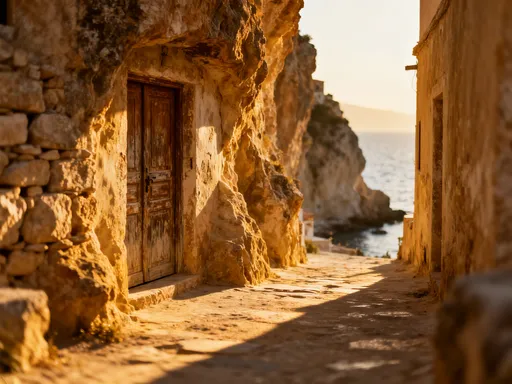
Walking through the central streets, one is immediately struck by the texture of the place—the way sunlight grazes centuries-old stonework, casting deep shadows in narrow passageways that seem to have been shaped more by foot traffic than by formal planning. Many doorways are carved directly into the bedrock, their frames smoothed by time and touch. Stone steps, worn concave by generations of use, connect levels of the town with an effortless grace. Vines climb ancient walls, and bougainvillea spills over low terraces, adding bursts of magenta and violet to the earth-toned palette. There is no artificial lighting that overwhelms the night sky; streetlamps are understated, their glow warm and localized, preserving the quiet rhythm of coastal life.
What defines Kas most is its continuity. There are no clear boundaries between the ancient and the contemporary. A 19th-century Ottoman house may stand beside a café built into a section of Byzantine fortification, while just above, Lycian tombs peer down like silent sentinels. This coexistence is not staged for tourists—it is the lived reality of the town. Residents go about their daily routines without fanfare, passing beneath archways that have stood for over a thousand years. The effect is not one of decay, but of endurance. Kas feels less like a preserved historic site and more like a living ruin—one that breathes, adapts, and remembers.
The Lycian Legacy: Rock-Cut Tombs and Built-In Monuments
High above the rooftops of Kas, carved into the sheer face of the cliffs, are the silent witnesses of a civilization that flourished over two millennia ago—the Lycian rock-cut tombs. These intricate facades, resembling temple pediments and ornate doorways, were chiseled directly into the limestone during the 4th century BCE, when the Lycian League ruled this stretch of southern Anatolia. Each tomb was designed to honor the dead with dignity, its entrance often framed by columns, friezes, and sculpted reliefs that mimic the architecture of the living. Some resemble small houses, complete with tiled roofs and window-like openings, suggesting a belief in an afterlife that mirrored earthly comfort.
What makes these tombs extraordinary today is not merely their craftsmanship, but their integration into the fabric of daily life. They are not confined to archaeological parks or fenced-off ruins; they are part of the town’s skyline. As you hike the well-trodden path leading up to the ancient amphitheater—one of Kas’s most iconic viewpoints—you walk directly beneath these tombs, their entrances looming overhead like portals to another time. From this vantage, the entire bay unfolds below: turquoise waters lapping against a crescent of white stone, fishing boats bobbing gently at anchor, and the red-tiled roofs of the town cascading down the hillside. The juxtaposition is breathtaking—ancient death monuments overlooking a vibrant, living community.
The Lycians were master stoneworkers and skilled navigators, known for their democratic city-states and unique burial customs. Unlike other ancient cultures that buried their elite in grand underground chambers, the Lycians elevated their dead, placing tombs high in the cliffs where they could oversee the land and sea. This practice reflected a deep spiritual connection to the natural world. Today, local residents still refer to certain tombs by names passed down through generations, such as the “Tomb of the Merchant” or the “Warrior’s Rest,” though the identities of those interred remain unknown. These names, whether historically accurate or not, reflect a cultural continuity—an ongoing dialogue between past and present.
Preservation efforts have ensured that these tombs remain accessible without being exploited. The Turkish Ministry of Culture and Tourism monitors the site, restricting climbing on the most fragile facades while maintaining safe viewing platforms. Importantly, conservation does not mean isolation. Kas has resisted the temptation to turn its ancient heritage into a sterile museum exhibit. Instead, the tombs remain embedded in the town’s identity—visible from homes, cafes, and hiking trails. For visitors, this creates a rare experience: the chance to encounter antiquity not behind glass, but as a living part of the environment.
Ottoman Echoes: Courtyard Houses and Stone Facades
While the Lycian tombs command the heights, the heart of Kas’s architectural charm lies in its historic residential quarters, where Ottoman-era houses line the winding streets with quiet elegance. Built primarily during the 18th and 19th centuries, these homes reflect a domestic architecture finely tuned to the Mediterranean climate and social customs of the time. Most feature thick stone ground floors with wooden upper levels, their overhanging balconies providing shade and privacy. The facades are modest, often painted in soft ochre, cream, or pale blue, with green shutters framing narrow windows. Inside, the design centers around a central courtyard—sometimes no more than a few square meters—where families gathered for meals, conversation, and respite from the summer heat.
These courtyard houses were engineered for comfort long before modern air conditioning. The heavy stone walls absorb heat during the day and release it slowly at night, maintaining a stable indoor temperature. Wooden latticework, known locally as *kafes*, allows for airflow while preserving modesty—a tradition rooted in Ottoman domestic values. Roofs are flat, constructed from layers of compacted earth and stone, ideal for drying herbs, storing goods, or even sleeping under the stars during the hottest months. Many of these homes originally belonged to fishermen, merchants, and minor officials, their scale reflecting a society of modest prosperity rather than imperial grandeur.
Today, a significant number of these houses have been carefully restored, blending historical authenticity with modern functionality. Some serve as boutique guesthouses, others as private residences, and a few have been converted into small galleries or artisan workshops. Restoration projects follow strict guidelines set by local preservation authorities, ensuring that original materials—such as hand-cut limestone and traditional timber framing—are used whenever possible. Modern additions, like plumbing and electricity, are integrated discreetly to avoid disrupting the aesthetic harmony of the streetscape.
One of the most important aspects of Kas’s architectural preservation is its regulatory framework. Building codes limit new construction to a maximum of two stories and require the use of locally sourced stone and traditional design elements. This prevents the kind of architectural dissonance seen in other tourist towns, where glass-and-steel structures clash with historic surroundings. In Kas, even new buildings feel like they belong—proof that thoughtful urban policy can protect cultural identity without stifling growth. The result is a town where history is not frozen, but gently guided into the future.
Adaptive Reuse: From Ancient Walls to Modern Cafes
One of the most enchanting qualities of Kas is the way history is not preserved behind velvet ropes, but lived in. Ancient stone walls, once part of defensive fortifications or storage chambers, now form the backdrops of bustling cafés, artisan shops, and open-air galleries. In one popular café near the harbor, patrons sip Turkish coffee beneath a vaulted Byzantine arch, its stonework darkened by centuries of weather and use. Another eatery has built its outdoor seating into a natural alcove, where the cliff face serves as a windbreak and the menu is written on a chalkboard leaning against a 2,000-year-old wall. These are not gimmicks—they are natural evolutions of space, born from a deep respect for what already exists.
This practice of adaptive reuse is not unique to Kas, but few places execute it with such sensitivity and charm. The key lies in proportion and restraint. Modern interventions are kept minimal—glass windows are framed in wood to match historic tones, furniture is simple and locally crafted, and lighting is subtle. The goal is not to recreate the past, but to let it coexist with the present. A visitor might enjoy a fresh lemonade at a table set between two ancient columns, unaware that they are sitting within the footprint of a Roman-era storage building. The history is there, but it does not dominate—it enhances.
Local business owners play a crucial role in maintaining this balance. Many are long-time residents who take pride in the town’s heritage and understand the importance of authenticity. They avoid commercial clichés, opting instead for a curated, low-key atmosphere that appeals to discerning travelers. Shops sell handmade soaps, olive oil, and ceramics—not mass-produced souvenirs. Menus highlight regional ingredients: grilled octopus, slow-cooked lamb, figs drizzled with honey. Even the music is understated, often acoustic or absent altogether, allowing the sounds of the sea, the clink of dishes, and the murmur of conversation to set the tone.
This seamless blending of old and new creates a powerful emotional resonance. It suggests that history is not something to be mourned or displayed, but something to be used, enjoyed, and passed on. When a grandmother sips tea in a courtyard that has existed for centuries, or a child draws on pavement near a Lycian tomb, the continuity feels natural. Kas does not perform its past—it lives it.
Urban Planning Without Blueprints: How Geography Shaped Kas
Kas was never designed on a drafting table. Its layout is the result of centuries of incremental growth, shaped entirely by the rugged topography of the Taurus Mountains meeting the Mediterranean Sea. There are no wide boulevards or grid-like streets here. Instead, the town unfolds along a network of winding footpaths, staircases, and alleyways that follow the natural contours of the land. This organic development was not a matter of choice, but necessity—building on steep, rocky terrain required adaptation, not imposition.
The absence of formal planning has, paradoxically, resulted in one of the most human-centered urban environments in the region. Because streets follow elevation lines, they create a constant interplay of ascent and descent, revealing new views at every turn. A narrow passage may open suddenly onto a panoramic vista of the bay, or a hidden staircase may lead to a tiny plaza shaded by an ancient olive tree. These micro-spaces—too small for cars, perfect for conversation—foster a sense of intimacy and discovery. There are no traffic lights, few vehicles, and no through roads, making the town inherently walkable and safe for children and elders alike.
This topographical influence extends to the placement of homes and public spaces. Houses are terraced into the hillside, each level stepping down toward the sea, maximizing views and ventilation. Doorways often open directly onto the street, creating a porous boundary between private and public life. A resident might sit on a low stone wall, greeting passersby, or hang laundry on a line strung between two buildings, the sheets fluttering in the sea breeze. Public fountains, once essential for daily water access, remain as decorative features, their basins now filled with flowers.
From a modern urban design perspective, Kas offers valuable lessons in sustainability and resilience. Its compact form reduces the need for transportation, its stone construction provides natural insulation, and its integration with nature minimizes environmental disruption. Unlike planned developments that flatten landscapes to fit geometric ideals, Kas demonstrates how cities can grow in harmony with their surroundings. It is a model of what architects call “incremental urbanism”—a slow, responsive process that prioritizes community, adaptability, and place-specific solutions.
Materials and Methods: What Holds Kas Together
The enduring strength of Kas’s architecture lies not just in its design, but in its materials and craftsmanship. The town is built primarily from local limestone—soft enough to be carved by hand, yet durable enough to withstand centuries of sun, wind, and salt air. This stone, quarried from nearby hills, gives the buildings their warm, golden hue and ensures visual continuity across generations. Traditional masons use hand tools to cut blocks to precise dimensions, fitting them together with minimal mortar. The joints are so tight that, in many older structures, a knife blade cannot fit between the stones.
Lime mortar, made from burnt limestone mixed with sand and water, has been used for centuries in the region. Unlike modern cement, which is rigid and prone to cracking, lime mortar is breathable and flexible, allowing walls to settle and shift slightly without structural damage. It also self-heals over time, as calcium carbonate re-forms in tiny cracks. This ancient technique, still taught and practiced by local artisans, contributes significantly to the longevity of Kas’s buildings. Flat roofs, constructed with layers of timber, reeds, and compacted earth, are perfectly suited to the dry climate, requiring minimal maintenance and providing excellent insulation.
What sets Kas apart is the continuity of skill. Many of today’s builders are descendants of families who have worked stone for generations. They learn through apprenticeship, not formal schooling, absorbing techniques that have changed little over hundreds of years. When a wall collapses after heavy rain, it is not replaced with concrete and steel, but rebuilt using the same methods as in the Ottoman period. This commitment to tradition is not nostalgic—it is practical. These methods have proven, over time, to be the most effective for the local environment.
Even modern renovations respect these principles. While contemporary homes may include glass windows and indoor plumbing, their exteriors adhere to traditional forms and materials. New construction often involves deconstructing and reusing old stone, ensuring that every addition feels like a continuation rather than an interruption. This deep respect for material and method is what gives Kas its cohesive, timeless character—one that cannot be replicated by simply copying architectural styles.
Why This Architecture Matters: Identity, Tourism, and Preservation
The built environment of Kas is more than a collection of old buildings—it is a living archive of cultural identity. Every stone, every doorway, every winding path tells a story of adaptation, resilience, and continuity. This authenticity is precisely what draws visitors from around the world, not as passive sightseers, but as respectful participants in a living tradition. Tourism in Kas is not mass-market; it is selective, often seasonal, and deeply connected to the rhythms of local life. Visitors come to walk the trails, sip tea in quiet courtyards, and experience a place where time moves differently.
Yet this very popularity brings challenges. Development pressure, though regulated, persists. Some property owners seek to maximize rental income by expanding homes beyond permitted limits or introducing foreign design elements. Climate change also poses a threat—increased rainfall and rising sea levels could accelerate erosion of ancient stonework. Dust from nearby road construction and pollution from boats can degrade delicate carvings. These risks require vigilant stewardship, not just from authorities, but from the community itself.
The future of Kas depends on a delicate balance—between preservation and progress, between tourism and tradition. The town must remain open and welcoming, but not at the cost of its soul. The solution lies in sustainable practices: supporting local artisans, enforcing building codes, promoting low-impact tourism, and educating visitors about the value of what they are experiencing. Kas should not become a museum frozen in time, nor should it be reshaped for convenience. Instead, it should continue to evolve—slowly, thoughtfully, and with respect for the layers of history embedded in its stones.
In a world where so many places look increasingly alike—dominated by global brands, standardized architecture, and digital homogeneity—Kas stands as a quiet rebuke. It reminds us that beauty can arise from limitation, that history can be a guide rather than a burden, and that communities can thrive by honoring their roots. To walk through Kas is to step into a different way of being—one where the past is not behind us, but all around us, holding us together, one stone at a time.