You Won’t Believe What I Discovered in Hyderabad’s Old City
Hyderabad isn’t just about biryani and pearls—it’s a living tapestry of culture, history, and hidden moments waiting to be experienced. I wandered through its winding lanes, not as a tourist, but as someone eager to feel the city’s pulse. From forgotten mosques echoing with prayer to artisans shaping bangles by hand, every corner told a story. This is more than sightseeing; it’s immersion. If you’re looking for real connections, not checklist attractions, Hyderabad will surprise you in the best way possible.
Stepping Into the Soul of Hyderabad
Leaving behind the sleek glass towers of Hyderabad’s IT corridors, the transition into the Old City feels like stepping through a portal in time. The skyline shifts from steel and glass to ancient minarets and domes that rise like whispers from another century. As the car slows near the Charminar, the air changes—thick with the scent of sandalwood incense, frying dough, and the faint musk of aging stone. The call to prayer drifts from a distant mosque, mingling with the rhythmic clang of metal from a coppersmith’s workshop. Street vendors balance trays of mirchi bajji on their heads, while rickshaws weave through crowds with practiced ease. This is not a curated heritage zone; it’s a fully lived-in world.
What makes this shift so powerful is its authenticity. There are no admission tickets, no roped-off areas. The Old City breathes on its own rhythm, governed by generations-old routines rather than tourist schedules. Women in vibrant khara dupattas carry brass pots to neighborhood wells, children chase goats through alleyways, and elders gather under neem trees to debate politics and poetry. For the traveler, choosing to step beyond the polished surface of guidebook highlights means embracing a deeper, more meaningful kind of discovery. It requires patience, respect, and a willingness to be an observer before becoming a participant.
The sensory overload is intentional and revealing. Each smell, sound, and sight carries cultural weight. The scent of cardamom and cloves in the air signals the presence of a dhaba serving slow-cooked haleem. The sound of hammer on metal points to a hidden workshop where brass utensils are still shaped by hand. Even the texture of the streets—uneven stone, worn smooth by centuries of footsteps—tells a story of endurance. Modern conveniences exist, of course. Mobile phones, plastic stools, and fluorescent lights blend seamlessly into the ancient fabric, not as intrusions, but as evidence of a culture that evolves without erasing its roots.
Why does this authenticity matter? Because it transforms travel from passive consumption into active connection. When you walk these streets not to take photos, but to understand, you begin to see patterns—the way shopkeepers greet each other with a hand over the heart, the way meals are shared from a single platter, the quiet dignity in everyday labor. These are not performances for visitors; they are lived truths. And in choosing to witness them with humility, the traveler gains something rare: a genuine encounter with a way of life that has weathered time, change, and modernity without losing its soul.
Charminar: More Than a Postcard Icon
Standing at the base of Charminar, it’s easy to understand why this monument has become the symbol of Hyderabad. Its four grand arches face the cardinal directions, crowned by delicate minarets that seem to brush the sky. Tourists gather on every side, angling for the perfect shot, often unaware of the living world swirling around them. But to see Charminar only through a lens is to miss its essence. The real magic lies not in the structure itself, but in the pulse of life that radiates from it—markets spilling into every alley, voices rising in bargaining and laughter, the constant hum of devotion and commerce intertwined.
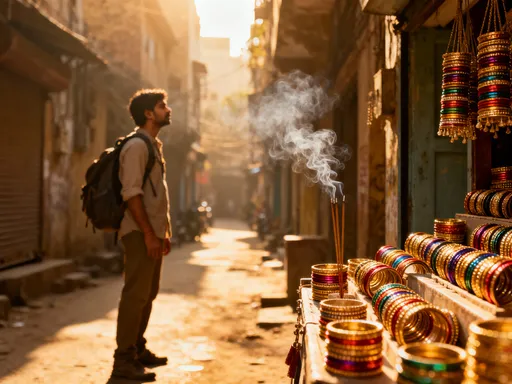
Just steps from the monument, the lanes of Laad Bazaar come alive with color and scent. Rows of shops display bangles in every hue—ruby red, emerald green, sapphire blue—glinting under strings of bare bulbs. Vendors call out not with aggressive sales pitches, but with the easy warmth of people who have spent decades in these stalls. One shopkeeper, his hands stained with henna, invites a passing visitor to try on a set of lacquer bangles. “Feel the weight,” he says, “not just the shine.” This is where tourism becomes dialogue. A simple question—“How are these made?” or “What does this color mean?”—can open a conversation that lasts far longer than any guided tour.
Nearby, tucked between spice stalls and tailoring shops, small mosques welcome worshippers throughout the day. The sound of Quranic recitation blends with the sizzle of frying jalebis, creating a harmony that feels uniquely Hyderabadi. It’s not unusual to see a man in a crisp white kurta pause to buy a cup of cutting chai before heading into prayer, or a group of schoolchildren removing their shoes at a mosque door before rushing off to class. These moments of quiet reverence coexist with the chaos of commerce, not in conflict, but in balance.
For visitors, navigating this space requires awareness. Crowds can be dense, especially during festival seasons or weekends. The best times to visit are early morning or late afternoon, when the light softens and the pace slows. Wearing comfortable shoes is essential, as the streets are uneven and often crowded. More importantly, approaching the area with respect—dressing modestly, asking before taking photos of people, speaking politely—opens doors that might otherwise remain closed. A smile, a nod, a simple “Shukriya” goes a long way. And in return, one might be invited into a backroom workshop, offered a taste of warm jalebi fresh from the oil, or guided to a hidden courtyard where the call to prayer echoes like a lullaby.
The Craftsmen Keeping Traditions Alive
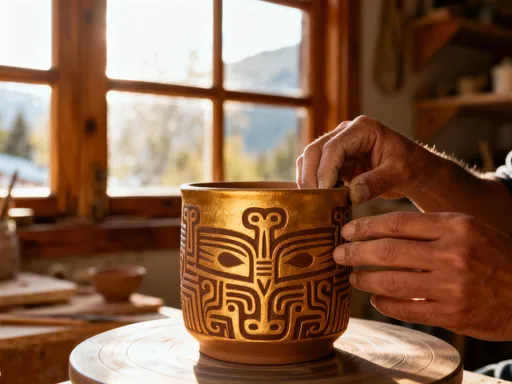
In the heart of Laad Bazaar, behind glass cases filled with glittering bangles, lie the real keepers of Hyderabad’s heritage—the artisans whose hands shape beauty from fire and lacquer. These craftsmen, many from families that have practiced this art for generations, work in tiny, sweltering rooms where furnaces burn day and night. The process is intricate: rods of lac are heated, molded, colored, and polished by hand, each bangle passing through multiple stages before it reaches the market. Some artisans specialize in gold inlay, others in mirror work or stone embedding, their skills passed down not through formal education, but through years of apprenticeship and observation.
One such craftsman, a man named Akbar, has worked in the same 10-foot shop for over forty years. His fingers, calloused and stained with dye, move with precision as he shapes a new batch of bangles. “This is not just a job,” he says, “it is our identity.” He speaks of the decline in demand for handmade pieces, as machine-made alternatives flood the market at lower prices. Yet, he continues, not for profit, but for pride. “When a woman wears one of these, she carries a piece of our history on her wrist.”
Supporting these artisans is more than a shopping choice—it’s an act of cultural preservation. Every purchase from a local workshop sustains a tradition that could otherwise fade. It keeps families employed, skills alive, and heritage visible. Travelers can contribute meaningfully by choosing to buy directly from makers rather than middlemen, by asking about the process, and by valuing the story behind the object. A simple question—“How long does this take to make?” or “What do the colors represent?”—shows respect and often leads to deeper conversation.
For those interested in a more immersive experience, some workshops welcome visitors for short demonstrations. These are not staged performances, but glimpses into real labor. Watching a bangle being shaped from molten lac, cooled in water, and polished with sandpaper is a lesson in patience and craftsmanship. It’s a reminder that beauty often comes from repetition, heat, and human touch—elements no machine can fully replicate. And when a traveler leaves with not just a bangle, but the memory of how it was made, the object becomes more than an accessory. It becomes a connection.
A Taste of Heritage: From Dastarkhwan to Dawat
In Hyderabad, food is not merely sustenance—it is memory, identity, and hospitality woven into every bite. To eat here is to participate in a centuries-old tradition of slow cooking, layered flavors, and communal dining. One of the most profound ways to experience this is through the dastarkhwan, a cloth spread on the floor where families and guests gather to share a meal. Unlike restaurant dining, where plates arrive in sequence, a dastarkhwan meal unfolds like a story—each dish revealing a new chapter of flavor and history.
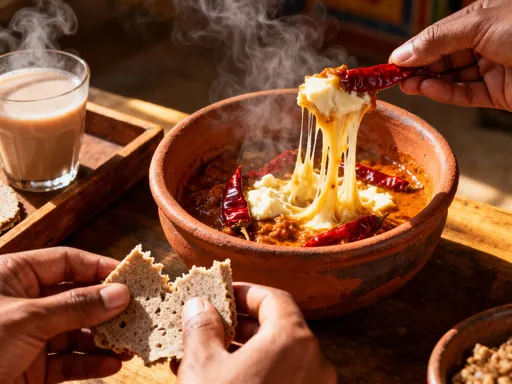
I was invited into a modest home in the Old City, where a family prepared a traditional dawat, or feast, for a visiting relative. The dastarkhwan was laid in the courtyard, shaded by a neem tree. The matriarch, dressed in a deep maroon sari, directed the serving with quiet authority. First came the appetizers—khatti dal papdi and mirchi bajji—followed by warm, flaky sheermal bread. Then the main course: Hyderabadi biryani, layered with saffron, caramelized onions, and tender meat, steamed in a sealed pot to lock in aroma. Each grain of rice was distinct, fragrant, and rich. Alongside came baghara baingan, eggplant slow-cooked in a nutty, tamarind-spiced gravy, and a cooling cucumber raita.
What made the meal unforgettable was not just the taste, but the ritual. Diners sat cross-legged, sharing dishes from the same platter. There was no rush, no distractions—no phones, no television. Conversation flowed easily, punctuated by laughter and the clink of spoons. The children were taught to serve elders first, a small but meaningful gesture of respect. Dessert—qubani ka meetha, a stew of apricots simmered with sugar and cardamom—arrived in clay bowls, served with a dollop of malai. It was a meal meant to be lingered over, not rushed.
Each dish carries cultural significance. Haleem, for instance, is not just a porridge of meat and grains—it is a Ramadan tradition, slow-cooked for hours and shared at dawn. Qubani ka meetha is often served during weddings, symbolizing sweetness in new beginnings. Even the act of eating from the floor has meaning—it grounds the diner, fosters equality, and connects the meal to ancestral practices. For travelers, participating in such a meal is a rare privilege. It requires humility—to accept an invitation, to sit on the floor, to eat with hands—but the reward is profound: a true taste of Hyderabadi warmth, generosity, and culinary artistry.
Echoes of the Past: Mecca Masjid and Hidden Courtyards
A short walk from Charminar stands Mecca Masjid, one of the largest and oldest mosques in India. Built from bricks made with soil brought from Mecca, its grand arched facade commands reverence. Yet, what strikes the visitor most is not its scale, but its serenity. Unlike many historic sites that feel frozen in time, Mecca Masjid is alive with daily life. Men in white skullcaps gather on the courtyard steps, sipping tea from small glasses, discussing the day’s news. Children dart between pillars, their laughter echoing under the high domes. In the shade of the eastern wall, an elderly man reads from a worn Quran, his lips moving silently.
Inside, the prayer hall is vast and cool, its sandstone floors worn smooth by centuries of bare feet. Devotees sit in quiet contemplation or perform namaz with focused devotion. The air carries the faint scent of rose water and sandalwood. This is not a museum—it is a place of living faith, where history and present coexist. Visitors are welcome, provided they dress modestly and observe respectfully. Women cover their heads, shoes are left at the entrance, and voices are kept low. In return, they are granted access to a space of profound peace.
What few tourists see are the hidden courtyards just beyond the main complex. Narrow alleys lead to quiet squares where time seems to pause. One such courtyard houses a centuries-old baoli, or stepwell, now dry but still majestic in its symmetry. Another contains a small madrasa where boys in white uniforms recite lessons in Urdu. These spaces are not marked on maps, nor do they appear in brochures. They are discovered by wandering, by asking, by being present. And in their stillness, they offer a deeper understanding of Hyderabad—not as a city of monuments, but as a community anchored in tradition, faith, and quiet resilience.
Deccani Language and Everyday Interactions
One of the most unexpected keys to connection in Hyderabad is language—specifically, Dakhini Urdu, the local dialect that blends Persian, Arabic, and Telugu influences. While English and Hindi are widely understood, hearing even a few words in Dakhini can transform a transaction into a moment of warmth. At a tea stall, saying “Ek cutting chai, please” earns a smile. Adding “Shukriya” instead of “Thank you” often prompts a cheerful “Khush rahiye!” in return. These small exchanges, though simple, signal respect and effort.
Language here is not just about words, but tone and gesture. A tea vendor might nod toward his pot and raise an eyebrow—“aur?” meaning “more?”—without speaking. A rickshaw driver might tap his wrist to indicate time, or gesture with two fingers to show the fare. These nonverbal cues are part of the city’s rhythm. Listening—truly listening—means paying attention not just to speech, but to silence, to pauses, to the way a sentence ends with a soft laugh.
For travelers, learning a few phrases—“Aap kaise hain?” (How are you?), “Yeh kitna hai?” (How much is this?), “Bohot khoobsurat hai” (Very beautiful)—opens doors. Shopkeepers are more likely to share stories, recommend hidden spots, or offer a sample of their goods. One bangle maker, touched that a visitor tried to pronounce “laal rang” (red color) correctly, invited her into his workshop for a private demonstration. “You tried,” he said. “That matters.”
More than fluency, what locals appreciate is sincerity. A hesitant phrase, a mispronounced word, even a confused smile—these are not failures, but invitations to connect. In a world where travel can feel transactional, these moments of linguistic vulnerability create genuine bonds. They remind us that communication is not about perfection, but about presence. And in Hyderabad, where hospitality is woven into the culture, even broken words are met with grace.
Balancing Old and New: Why Hyderabad Works
What makes Hyderabad truly remarkable is not just its past, but its ability to carry that past into the future. The city does not preserve its heritage in glass cases—it lives it, breathes it, adapts it. In the morning, a software engineer in Gachibowli might attend a meeting via Zoom; by evening, he could be walking through the Old City, buying bangles for his daughter or praying at Mecca Masjid. This coexistence is not forced, but natural—a reflection of a culture that values both progress and tradition.
For travelers, this balance offers a powerful lesson. It shows that modernity need not erase history, that innovation can coexist with reverence. It invites us to slow down, to look beyond the surface, to engage with places not as consumers, but as learners. The best way to experience Hyderabad is not on a tight schedule, but with open curiosity. Visit Charminar at dawn, when the light is soft and the crowds thin. Spend an afternoon in a quiet courtyard, watching the world go by. Accept an invitation to a home meal, even if it means eating on the floor. Ask questions. Listen. Be present.
Practical tips enhance the experience: the best times to visit are October to March, when the weather is mild. Auto-rickshaws and ride-sharing apps make navigation easy, but walking is the best way to discover hidden corners. Dress modestly, especially in religious areas. Carry small change for chai and snacks. And above all, resist the urge to rush. True immersion takes time. It happens in the quiet moments—a shared smile with a vendor, the taste of warm jalebi at sunset, the echo of prayer in an ancient courtyard.
Hyderabad does not reveal itself all at once. It unfolds slowly, like the layers of a biryani pot. And for those willing to look beyond the postcard views, to step into its lanes with respect and wonder, the city offers something rare: a deep, human connection to a culture that honors its past while walking confidently into the future. In a world of fleeting experiences, that is a gift worth savoring.