Bilbao’s Architectural Soul: Where Steel Meets Skyline
Imagine walking through a city where titanium curves dance in the sunlight, ancient churches stand shoulder-to-shoulder with futuristic masterpieces, and every street corner whispers innovation. That’s Bilbao—a place I never expected to love so deeply. This isn’t just a travel guide; it’s a journey through bold designs that transformed a once-industrial town into an architectural wonderland. You gotta see it to believe it. Nestled in Spain’s Basque Country, Bilbao is a living testament to how visionary architecture can revitalize a city’s spirit, economy, and global identity. From its gleaming modern icons to its weathered stone alleys, the city tells a story of transformation, resilience, and artistic courage. In this exploration, we’ll walk its streets, uncover its hidden gems, and understand how steel, glass, and imagination rebuilt a skyline and a soul.
The Guggenheim Effect: How One Building Changed Everything
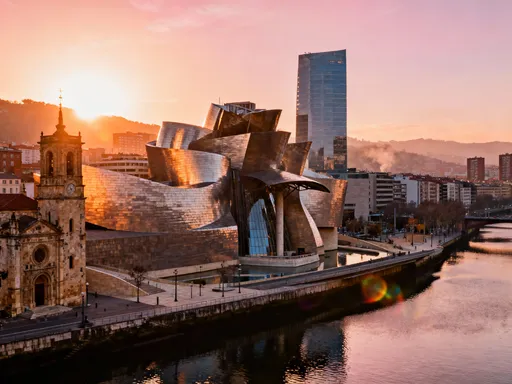
At the heart of Bilbao’s rebirth stands the Guggenheim Museum, a titanium-clad marvel that redefined what a museum could be—not just a container for art, but a work of art itself. Designed by Canadian-American architect Frank Gehry and opened in 1997, the building’s undulating, fish-scale-like exterior reflects light in ever-changing patterns, shifting from silver to gold to blue depending on the hour and weather. Its 33,000 titanium tiles, each hand-crafted and subtly curved, give the structure a fluid, organic presence, as though a great metallic creature has settled beside the Nervión River. This wasn’t just an architectural experiment—it was a cultural earthquake.
The impact of the Guggenheim extends far beyond aesthetics. Before its arrival, Bilbao was known primarily for shipbuilding, steel production, and industrial decline. Unemployment was high, and the city struggled with a fading identity. The museum’s construction was part of a broader urban renewal plan, but few predicted the phenomenon it would become. In its first three years, the Guggenheim attracted over 4 million visitors, injecting an estimated €500 million into the local economy. This dramatic turnaround became known as the “Bilbao Effect”—a term now used worldwide to describe how a single piece of iconic architecture can catalyze economic and cultural revival.
Inside, the museum continues the journey of innovation. Its vast central atrium, bathed in natural light from a soaring glass canopy, serves as the spine of the building, connecting 19 galleries of varying sizes and shapes. The space feels alive, dynamic—walls curve, staircases spiral, and light filters through unexpected openings. Exhibits range from contemporary installations to classic modern art, but the architecture itself often becomes the main attraction. Visitors don’t just view art—they move through it, experiencing space as sculpture. The Guggenheim isn’t merely a landmark; it’s a symbol of what’s possible when a city dares to dream in bold forms and reflective metal.
Beyond the Guggenheim: Hidden Architectural Gems
While the Guggenheim may be Bilbao’s most famous son, the city’s architectural richness doesn’t end there. Just a short walk away, the Zubizuri Bridge—meaning “white bridge” in Basque—spans the Nervión with a sleek, minimalist elegance. Designed by Santiago Calatrava and completed in 1997, the same year as the Guggenheim, the bridge features a single, curved white arch supporting a glass-floored walkway. At night, it glows like a ribbon of light, connecting the old town with the modern Abandoibarra district. Though its glass surface has required periodic maintenance due to wear, its design remains a striking example of how infrastructure can be both functional and poetic.
Nearby, the San Antón Church offers a different kind of architectural dialogue—one rooted in centuries of history. Its modest Gothic tower, crowned with a distinctive spire, overlooks the river and marks the site of one of Bilbao’s oldest neighborhoods. What makes this structure remarkable is not just its age, but its role as a silent witness to change. It stands just steps from the Guggenheim, creating a powerful visual contrast: the vertical stone spire of tradition facing the horizontal sweep of titanium modernity. Together, they form a skyline conversation between past and future, faith and innovation.
Another hidden gem is the Azkuna Zentroa, a former wine warehouse transformed into a multidisciplinary cultural center. Renovated by French designer Philippe Starck in 2010, the building retains its original brick shell but bursts with color and energy inside. Its interior features a seven-story atrium surrounded by suspended walkways, glass elevators, and vibrant murals. Once a place of storage and commerce, it’s now a hub for dance classes, film screenings, and wellness workshops—a perfect metaphor for Bilbao’s adaptive reuse philosophy. These structures, though less photographed than the Guggenheim, are equally vital in telling the city’s full architectural story.
Old Town Meets New Vision: Contrasts That Captivate
The Casco Viejo, or old town, is where Bilbao’s soul feels most alive. Its narrow, cobblestone streets wind through seven original neighborhoods, each with its own character and charm. Here, centuries-old buildings with wooden balconies and wrought-iron railings house pintxo bars, artisan shops, and family-run businesses. The air smells of roasted coffee, cured ham, and damp stone—a sensory tapestry woven over generations. Yet, within this historic fabric, modern interventions appear with surprising harmony.
One such example is the restoration of the Mercado de la Ribera, one of Europe’s largest indoor markets. While its exterior preserves the traditional stone façade, the interior has been updated with modern lighting, ventilation, and layout improvements. Vendors still sell fresh fish caught that morning, seasonal vegetables from local farms, and Basque cheeses aged to perfection—but now under a ceiling of soft, energy-efficient illumination. This balance of preservation and progress is evident throughout the district, where new signage, lighting, and accessibility features have been added without compromising historical integrity.
Another striking contrast is the Arriaga Theatre, a 19th-century opera house modeled after the Paris Opera. Its ornate façade, with Corinthian columns and sculpted figures, faces a plaza where contemporary sculptures occasionally appear as part of temporary exhibitions. On any given evening, one might see an elderly couple leaving a classical concert while a group of young architects sketches the building’s details nearby. This blending of eras isn’t accidental—it’s intentional urban design that respects heritage while making room for new expressions. The Casco Viejo proves that modernity doesn’t require demolition; it can thrive through dialogue, care, and thoughtful integration.
The Waterfront Transformation: From Docks to Design
Just a few decades ago, Bilbao’s riverfront was a maze of cranes, warehouses, and industrial noise. The Nervión River, once the lifeblood of the city’s economy, had become a symbol of decline. Factories closed, docks emptied, and pollution clouded the water. But a bold urban vision transformed this neglected zone into one of Europe’s most admired waterfronts. The redevelopment began in the 1990s, led by the Bilbao Metropoli-30 initiative, a public-private partnership dedicated to sustainable urban planning.
Today, the riverbanks are lined with wide pedestrian promenades, green spaces, and modern buildings that reflect both function and beauty. Former industrial sites have been repurposed into cultural venues, offices, and residential complexes. The Iberdrola Tower, a sleek skyscraper designed by César Pelli, stands as a symbol of this new era. At 165 meters, it’s the tallest building in northern Spain and features a double-skin façade that reduces energy consumption by regulating temperature naturally. Its presence signals Bilbao’s arrival as a modern, forward-thinking city without erasing its industrial roots.
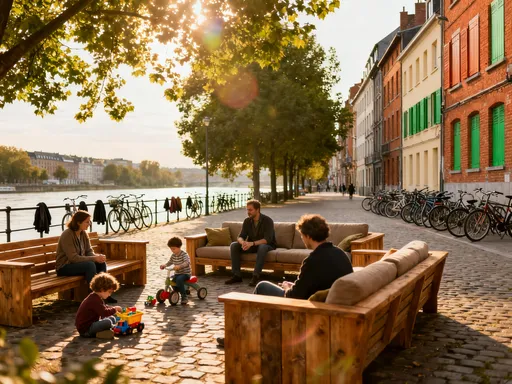
Equally important are the small-scale interventions: floating gardens, river cruises with panoramic views, and public art installations that change with the seasons. The Doña Casilda Iturrizar Park, once a private estate, has been converted into a lush urban oasis with walking paths, fountains, and native plant species. Families picnic here, children play, and couples stroll along the water’s edge—activities once unimaginable in this part of town. The waterfront’s transformation is not just about aesthetics; it’s about reclaiming space for people, nature, and community life.
Materials That Speak: Titanium, Glass, and Stone
Architecture in Bilbao is not just seen—it’s felt. The city’s buildings communicate through texture, reflection, and weight. Titanium, introduced globally by the Guggenheim, has become a signature material, chosen for its durability, lightness, and ability to interact with light. Unlike steel, which can rust, or aluminum, which dents easily, titanium withstands Bilbao’s rainy climate while maintaining its luster. Its use was revolutionary not just for appearance but for performance—proving that beauty and resilience can coexist.
Glass, another dominant material, brings transparency and connection. Whether in the soaring atrium of the Guggenheim, the delicate walkway of the Zubizuri Bridge, or the energy-efficient façades of new office towers, glass dissolves boundaries between inside and outside. It allows daylight to flood interiors, reducing energy use and enhancing well-being. In a city with over 150 rainy days a year, maximizing natural light is both a practical and emotional necessity. The way sunlight filters through glass onto stone floors creates a sense of warmth even on gray days.
And then there is stone—Bilbao’s original building material. Local limestone and sandstone form the foundations of its oldest structures, from churches to townhouses. These materials ground the city, providing visual and emotional stability amidst the shimmer of modern forms. Restoration projects often reuse original stone, carefully cleaning and resetting it to preserve authenticity. The contrast between the cool, textured stone and the smooth, reflective titanium creates a rich architectural palette—one that honors the past while embracing the future. Together, these materials tell a story of place, climate, and cultural identity.
Architects Who Shaped the City: Visionaries Behind the Facades
Bilbao’s skyline is the work of both international stars and local collaborators. Frank Gehry, though not Basque, immersed himself in the city’s culture before designing the Guggenheim. He studied its topography, its river curves, and even the way light hits the hills. His design echoes the movement of water and the scales of fish—symbols deeply tied to Bilbao’s maritime history. Gehry’s philosophy—that architecture should be expressive, emotional, and surprising—found its perfect canvas here.
Santiago Calatrava, known for his sculptural approach to engineering, brought a different sensibility. His Zubizuri Bridge is less about mass and more about line and grace. The single white arch appears almost weightless, a frozen arc of motion. Calatrava often draws inspiration from the human body and nature, and in Bilbao, his work complements rather than competes with its surroundings. The bridge doesn’t dominate the river—it enhances it.
Rafael Moneo, a Pritzker Prize-winning Spanish architect, contributed the Master Plan for the Abandoibarra district, guiding the integration of new buildings with the city’s scale and rhythm. His work emphasizes context, proportion, and material harmony. Under his guidance, Bilbao avoided the trap of becoming a collection of isolated icons; instead, it evolved into a cohesive urban environment where each structure supports the whole. These architects, along with local firms and urban planners, proved that global talent could serve local needs when rooted in respect and collaboration.
Experiencing Architecture: Tips for Seeing Bilbao Like a Designer
To truly appreciate Bilbao’s architecture, slow down. Start early in the morning when the light is soft and the streets are quiet. Walk from the Casco Viejo toward the Guggenheim, noticing how the city unfolds layer by layer. Visit the museum at different times of day—morning light glints off the titanium, while evening shadows reveal its sculptural depth. Bring a camera, but also take moments to simply observe without lenses or filters.
Follow the Ría de Bilbao promenade, which offers uninterrupted views of the skyline. Stop at the Campo Volantin viewpoint for a classic postcard shot of the Guggenheim with the Zubizuri Bridge in the foreground. Consider a guided walking tour led by local architects or urban historians—they offer insights into design choices, construction challenges, and cultural meanings that aren’t obvious to the casual observer. Many tours are available in English and tailored for non-specialists.
Don’t overlook the details: run your hand along a stone wall, notice how glass panels meet at precise angles, or observe how rainwater is channeled through sculptural drains. These small elements reveal the care behind the grand gestures. Wear comfortable shoes, carry a light jacket (the weather changes quickly), and allow at least two full days to absorb the city’s rhythm. Bilbao rewards patience and presence—it’s not a place to rush through, but to wander, wonder, and feel.
A City Reborn in Steel and Light
Bilbao’s journey from industrial decline to architectural beacon offers more than just beautiful buildings—it offers hope. It shows that cities can reinvent themselves not by erasing the past, but by weaving it into new forms. The Guggenheim didn’t just attract tourists; it inspired confidence, creativity, and civic pride. It proved that investing in culture and design can yield economic, social, and emotional returns far beyond initial expectations.
Today, Bilbao stands as a model for urban transformation worldwide. Cities from Liverpool to Detroit have studied its example, seeking their own versions of the “Bilbao Effect.” But what made it work wasn’t just one building—it was a long-term commitment to quality, sustainability, and community. It was the courage to embrace change while honoring identity. The titanium curves, glass bridges, and stone streets are not just materials—they are metaphors for resilience, innovation, and unity.
For the traveler, Bilbao is more than a destination. It’s an invitation to see cities differently—to notice how space shapes emotion, how design influences daily life, and how beauty can be a force for renewal. Whether you’re standing beneath the Guggenheim’s shimmering sails or sipping cider in a centuries-old tavern, you’re part of a living story. Bilbao reminds us that even in steel and light, there is soul. And sometimes, all it takes is one bold idea to change everything.