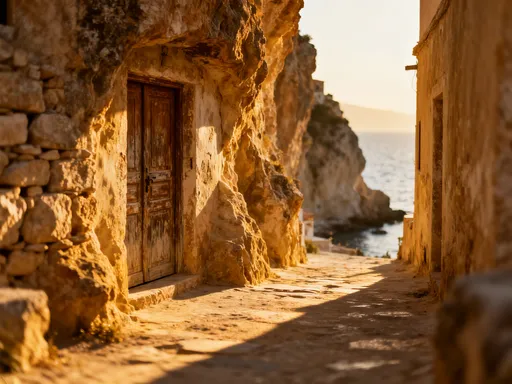
You Won’t Believe What I Discovered Exploring Bodrum’s Hidden Coastal Life
Bodrum, Turkey, is more than just a postcard-perfect coastline. I went beyond the marinas and ancient ruins to experience its soul—through local fishing rhythms, sunrise kayak trails, and quiet coves only villagers know. This isn’t just sightseeing; it’s immersion. What makes Bodrum’s coastal culture so uniquely alive? The answer isn’t in guidebooks. It’s in the water, the wind, and the people who call this place home. Let me take you where tourism fades and real discovery begins.
Arrival with Purpose: Why I Chose Bodrum for Deep Exploration
When I first arrived in Bodrum, the contrast was immediate. The harbor sparkled with sleek yachts and echoed with the chatter of international tourists. Colorful parasols lined the waterfront cafes, and the scent of grilled fish mingled with sunscreen. Yet just a ten-minute drive inland, the rhythm changed—narrow stone paths wound through whitewashed houses, roosters crowed from quiet courtyards, and laundry flapped gently in the Aegean breeze. This duality drew me in. I had not come to repeat the well-worn path of guided tours and sunset cruises. Instead, I sought to understand the living culture of Bodrum, the one shaped by generations of fishermen, farmers, and artisans whose lives unfold in harmony with the sea and seasons.
Traveling in early May, just before the summer rush, gave me rare access. The town had not yet swelled with crowds. Local shops were open without the urgency of peak season, and residents moved at a natural pace. Fishermen lingered by their boats after the morning catch. Village elders sat on low stools outside corner markets, sipping tea and exchanging stories. This off-season timing was intentional. I knew that authenticity often retreats under the pressure of mass tourism. By arriving when the demand for spectacle was low, I found space to listen, observe, and connect. The real Bodrum, I realized, doesn’t perform for cameras. It simply lives.
My goal was not to collect landmarks but to participate. I wanted to wake with the fishermen, paddle through hidden inlets, and eat where locals eat. I carried no checklist of Instagrammable spots. Instead, I followed quiet invitations—a nod from an elder, a shared smile at a market stall, a captain’s offer to take me “where the sea is still clean.” These small gestures became my map. They led me beyond the curated facades and into the heart of a coastal community that thrives not because of tourism, but in spite of it. This was not about rejecting tourism altogether, but about choosing a different way to engage—one rooted in respect, curiosity, and presence.
The Morning Ritual: Joining Local Fishermen at Dawn
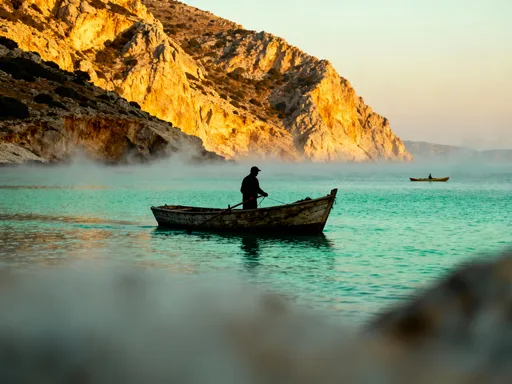
One of the most transformative moments of my journey began before sunrise. I met Hasan, a fisherman in his late fifties, at the edge of a small cove near Gümbet. His boat, a modest wooden *lante*, bobbed gently in the predawn light. He greeted me with a quiet nod and handed me a pair of worn gloves. “We work first,” he said simply. There was no grand introduction, no performative welcome—just an invitation to join. And so, in the stillness of early morning, I stepped onto his boat and into a world governed by tides, tradition, and trust.
For the next two hours, I learned the quiet labor of small-scale fishing. Hasan showed me how to inspect and mend the nets, explaining that each tear tells a story—of a strong fish, a sharp rock, or worn thread. We sorted the night’s catch: sea bream, red mullet, and small octopuses still curling their arms. Hasan named each species in Turkish, patiently repeating as I struggled with pronunciation. He taught me which fish were in season, which to release, and why certain areas were fished only at specific times. This was not industrial fishing. It was a practice shaped by necessity, knowledge, and a deep understanding of marine cycles.
What struck me most was the sustainability woven into every action. There were no electronic sonar devices, no massive hauls. Hasan used a hand-operated winch and relied on decades of memory to find the best spots. He spoke of the sea as a provider, not a resource to be exploited. “She gives what she can,” he said, looking out over the water. “We take only what we need.” This philosophy was echoed by other fishermen I met—many of whom had inherited their boats and routes from their fathers. Their livelihoods depended on the health of the sea, and their methods reflected that truth. In a world where overfishing threatens marine ecosystems, Bodrum’s small-scale fishermen offer a quiet model of balance.
Paddling Through Silence: A Kayak Journey Along Secret Coves
From the sea, Bodrum reveals a different face—one of hidden inlets, limestone cliffs, and crystal-clear waters untouched by crowds. One morning, I set out from Yalıkavak with a local guide, Aylin, who grew up along this coast. We paddled in silence for long stretches, our kayaks cutting through water so clear we could see sea urchins and starfish on the rocky seabed. The only sounds were the dip of our paddles, the distant cry of gulls, and the occasional splash of a fish breaking the surface. This was slow travel in its purest form—movement that allowed the landscape to unfold gradually, without rush or distraction.
Our route took us past secluded coves known only to residents. One such spot, a narrow inlet framed by olive trees and wild thyme, had no name on any map. Aylin called it *Sessiz Koy*—the Quiet Bay. We anchored and swam, the water cool and refreshing after the morning sun. She pointed out underwater rock formations that created natural currents, attracting schools of fish. “This is where we used to come as children,” she said. “No one else knew it. Now, sometimes a gulet passes by, but most tourists never see it.” Her words reminded me how much of Bodrum’s beauty lies just beyond the reach of conventional tours.
Kayaking offered a unique perspective—low to the water, unobtrusive, and intimate. Unlike motorboats that zip from one designated stop to the next, kayaks move at the pace of the sea. We could stop wherever we pleased, drift beside sea caves, or float on our backs and watch the sky. This slowness fostered a deeper awareness. I noticed the way sunlight danced on the waves, the subtle shift in water color over different depths, and the quiet life thriving beneath the surface. It was a reminder that true discovery is not about how many places you visit, but how deeply you experience the ones you reach.
Village Rhythms: Stepping Into Bodrum’s Inland Pulse
Beyond the coastline, Bodrum’s interior holds another layer of life—one shaped by agriculture, tradition, and self-reliance. I spent a day in Sipari, a hillside village accessible by a winding road lined with fig trees and stone walls. Here, life moved to a different rhythm. Women gathered in courtyards to shell beans. Men repaired terraces with hand-cut stones. The air carried the scent of woodsmoke and drying herbs. This was not a preserved museum village, but a living community where centuries-old practices continue out of necessity and pride.
I was welcomed into the home of Fatma Hanım, a woman in her seventies who has lived in Sipari her entire life. We sat on woven mats under a grapevine arbor, sipping strong black tea from small glasses. She spoke in the local dialect, her words rich with expressions I had never heard in the tourist areas. Through a translator, she shared stories of her childhood—walking miles to school, harvesting olives by hand, and preserving food for winter. Her family still grows most of their own food: tomatoes, cucumbers, figs, and herbs. “We don’t need much from the market,” she said with a smile. “The land gives us what we need.”
Later, I joined a small group helping to collect olives from an ancient grove. The trees were gnarled and twisted, some over a hundred years old. We used long rakes and cloth nets, working slowly to avoid damaging the branches. The olives would be pressed into oil, a staple in every household. This connection to the land stood in quiet contrast to the coastal economy, which increasingly depends on tourism. In Sipari, life was not shaped by visitor seasons but by natural cycles—planting, harvesting, preserving. It was a reminder that Bodrum’s identity extends far beyond its beaches. Its strength lies in this duality: a coastline that welcomes the world, and a countryside that sustains itself.
Flavors of the Coast: Eating Like a Local, Not a Tourist
One of the most direct ways to understand a culture is through its food. In Bodrum, I made a point to eat where locals eat—not in the marina restaurants with laminated menus in six languages, but in small, family-run *lokantas* tucked down side streets. One such place, a modest eatery in the Gümüşlük neighborhood, became a highlight. There were no outdoor signs, no online reviews. Just a chalkboard listing the day’s offerings and a few wooden tables shaded by a tarp.
I tried *deniz börülcesi*, a local specialty known as sea beans. Served cold with lemon and olive oil, it had a briny, crisp texture unlike anything I’d tasted. The owner, Melek, explained that her husband gathers it from rocky shores at low tide. “It grows where the waves splash,” she said. “Only in clean water.” She also served grilled octopus, tender and smoky, caught that morning by her brother-in-law. Every dish on the menu was seasonal, simple, and deeply rooted in the coastal environment. There were no imported ingredients, no fusion experiments—just food that reflected the place and its rhythms.
This emphasis on hyper-local ingredients is central to Bodrum’s culinary identity. Markets are filled with produce from nearby farms: eggplants, zucchinis, herbs, and citrus. Fish is sold hours after it’s caught, often still on ice from the morning boat. Even desserts rely on local flavors—figs, mastic, and honey from mountain hives. Eating this way felt like participating in a tradition that values freshness, seasonality, and connection. It was the opposite of the globalized, standardized cuisine found in many tourist zones. Here, a meal wasn’t just sustenance. It was a story of the sea, the soil, and the people who tend them.
Sailing with Stories: A Private Gulet Trip with a Veteran Captain
No exploration of Bodrum’s coastal life would be complete without time on the water. I arranged a private day trip with Captain Orhan, a man in his sixties who has spent over forty years navigating these waters. His gulet, a traditional wooden sailing vessel, was not the luxurious charter boat often seen in the harbor, but a working craft maintained with care and pride. As we set sail from the Bodrum peninsula, he pointed to the coastline and began to share stories—some historical, some personal, all deeply tied to the sea.
He spoke of ancient quarries where marble was loaded onto ships bound for Athens and Rome. We anchored near one such site, where the rock face still bore the marks of chisels. “This stone built empires,” he said. “Now, only the wind remembers.” He also told of storms he’d weathered, shipwrecks he’d witnessed, and the changing patterns of fish migration over the decades. His knowledge was not learned from books, but from a lifetime of watching the sea. He could read the clouds, the currents, the behavior of birds—all signs that guided his journey.
We swam in a hidden bay where the water was so clear it felt like floating in air. Orhan brought out a simple lunch—bread, cheese, tomatoes, and fresh anchovies marinated in lemon. As we ate, he spoke of his son, who now works in tourism but dreams of sailing. “I hope he learns the old ways,” Orhan said. “Not just to drive a boat, but to listen to it.” His words stayed with me. Maritime culture in Bodrum is not just about boats and routes. It’s about a relationship—a dialogue between people and the sea that is passed down through stories, skills, and shared meals. To sail with Orhan was to travel through time, where history wasn’t in ruins, but alive in memory.
The Quiet Side of Tourism: Balancing Access and Preservation
Throughout my journey, I couldn’t ignore the tension between tourism and preservation. In central Bodrum, the impact was visible—crowded streets, high-rise hotels, and a sense of commercialization that sometimes overshadowed authenticity. Yet in the peripheral areas—the quiet coves, the inland villages, the family-run *lokantas*—a different reality persisted. Here, tourism was present but not dominant. Locals welcomed visitors, but on their own terms. They offered tea, shared stories, and opened their lives—but expected respect in return.
I spoke with several residents about their views on tourism. Some welcomed the economic benefits, especially younger generations seeking opportunities. Others expressed concern about rising prices, environmental strain, and the loss of traditional ways. “We want people to come,” said Aylin, the kayak guide. “But we want them to see us, not just the beach.” Her words captured a common hope: that tourism could be a bridge, not a barrier. That visitors might come not just to consume, but to connect.
Responsible engagement, I learned, starts with awareness. It means choosing off-season travel, supporting local businesses, and avoiding behaviors that disrupt daily life. It means asking permission before photographing people, speaking quietly in residential areas, and leaving no trace in natural spaces. It also means embracing slowness—spending days rather than hours in a place, building relationships instead of collecting photos. The most meaningful travel doesn’t require grand gestures. It requires presence. When travelers slow down, listen, and honor local rhythms, they become part of the community’s story, not just observers of it.
Conclusion: Why Bodrum’s True Magic Lies Beneath the Surface
My time in Bodrum changed the way I think about travel. I arrived expecting beauty—and I found it in abundance. But I stayed for something deeper: connection. The magic of Bodrum is not in its postcard views or luxury marinas. It is in the fisherman who shares his catch, the elder who offers tea without expecting payment, the captain who sails not for profit but for love of the sea. It is in the quiet coves, the olive groves, the flavors of a meal made with care. These are not attractions. They are acts of living.
What I discovered is that true travel is not about how far you go, but how deeply you go. It is about stepping off the beaten path, not to escape people, but to find them. It is about trading convenience for authenticity, speed for presence, and consumption for contribution. Bodrum taught me that the most meaningful journeys are not measured in miles, but in moments of shared humanity.
To future travelers, I offer this: seek depth. Arrive with curiosity, not expectation. Let go of the need to see everything, and instead, stay long enough to feel something. Honor the places you visit by learning their rhythms, supporting their people, and leaving quietly. Because the sea, like memory, remembers those who listen. And in Bodrum, the waves still carry stories—for those willing to pause, paddle closer, and hear them.