You Gotta See How Liège Turns Streets Into Living Rooms
Walking through Liège, I didn’t just visit a city—I joined its daily rhythm. Public spaces here aren’t just for passing through; they’re where life unfolds openly, warmly, unapologetically. From bustling squares to riverside benches filled with laughter, I realized how deeply design and community shape experience. This isn’t urban planning—it’s human connection made visible. And honestly? It changed how I see cities forever.
Arrival: First Impressions of Urban Warmth
Stepping off the train at Liège-Guillemins station is like entering a portal between eras. The station itself, a sweeping glass and steel structure designed by Santiago Calatrava, stands as a monument to modern engineering. Its vast, wing-like canopies flood the concourse with natural light, creating a sense of arrival that feels both grand and welcoming. Yet just beyond its polished floors and minimalist lines, the city reveals a different kind of energy—one that’s organic, layered, and deeply human.
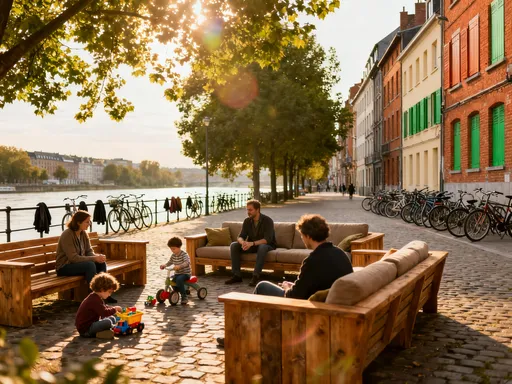
Within minutes of leaving the station, the transition becomes clear. Wide sidewalks invite slow walking. Pedestrian-only zones begin almost immediately, guiding visitors past cafés with outdoor tables and shopfronts that open directly onto the street. There’s no barrier between inside and outside, between private commerce and public life. People linger over coffee, children chase bubbles blown by street performers, and elderly couples sit on low walls sharing stories. The pace is unhurried, the atmosphere inclusive. This isn’t a city built for transit—it’s built for presence.
What makes this initial impression so powerful is how effortlessly Liège blends accessibility with authenticity. Unlike some European cities where historic centers feel preserved behind glass, Liège’s core pulses with everyday life. There are no velvet ropes or ticketed entries to experience its soul. Instead, the city opens its arms through simple choices: level pathways, clear signage, benches placed in clusters rather than isolation, and greenery woven into corners where concrete might otherwise dominate. These details don’t shout for attention, but together they create a quiet invitation: stay awhile, breathe, belong.
The warmth isn’t accidental. It stems from decades of thoughtful urban policy prioritizing people over vehicles, connection over congestion. Traffic has been rerouted, parking minimized, and pedestrian flow optimized not just for efficiency but for comfort. The result is a downtown that feels safe, legible, and alive at all hours. For travelers, especially those accustomed to crowded tourist traps or sterile business districts, this sense of ease can be startling—and deeply refreshing.
Place Saint-Lambert: The Beating Heart of Civic Life
If Liège has a central stage, it is Place Saint-Lambert. Once dominated by the towering presence of the former Liège Cathedral, the square today carries the weight of history while embracing a vibrant present. Though the cathedral was largely demolished during the French Revolution, its surviving façade and archaeological remains serve as a solemn reminder of the city’s layered past. Yet rather than becoming a monument frozen in time, the square has evolved into one of Belgium’s most dynamic public spaces.
On any given day, the open expanse of cobblestone and granite transforms according to need. On market days, wooden stalls bloom with local produce—crisp apples from the Ardennes, wheels of creamy fromage, jars of wildflower honey. Families weave through the aisles, sampling charcuterie or selecting fresh herbs. On weekends, the space becomes a stage for cultural expression: jazz ensembles play under pop-up awnings, dancers perform impromptu routines, and children chase pigeons between the retractable bollards that keep cars at bay.
What’s remarkable about Place Saint-Lambert is how little it feels curated. While many European cities invest heavily in polished plazas with choreographed events, Liège allows its citizens to shape the space organically. Locals gather not because they’ve been told to, but because the environment supports it. A row of movable chairs appears in the afternoon sun; a group sets up a card game near the fountain; teenagers claim a corner for skateboarding when foot traffic thins. This flexibility is made possible by deliberate design choices—slip-resistant paving, discreet power outlets for vendors, ample lighting—that support spontaneous use without compromising safety or accessibility.
The square also exemplifies how heritage and functionality can coexist. Archaeological excavations are visible behind glass panels embedded in the ground, allowing passersby to peer into centuries-old foundations. Interpretive signs, written in French, Dutch, English, and German, ensure that visitors from across Europe can engage with the site’s significance. At the same time, modern elements like Wi-Fi hotspots and public restrooms meet contemporary needs. The balance is subtle but effective: respect for the past does not come at the expense of present-day usability.
Along the Meuse: Where Nature Meets Neighborhoods
The Meuse River doesn’t just flow through Liège—it stitches it together. From the lush Parc de la Boverie in the south to the historic Citadel perched high above the north, the riverbanks offer some of the city’s most accessible and emotionally resonant public spaces. Walking these paths feels less like sightseeing and more like participating in a shared ritual of relaxation, reflection, and connection.
One of the most striking features along the river is how the terrain is used creatively. Instead of building rigid seawalls or elevated promenades, designers have incorporated stepped terraces that descend gently to the water’s edge. These serve multiple purposes: during high water, they withstand minor flooding; during festivals, they become natural amphitheaters; and on quiet evenings, they transform into informal seating for couples watching the sunset or friends sharing wine. The steps are made of durable stone, wide enough for groups to spread out, and equipped with handrails where needed—small touches that make the space usable for all ages and abilities.
Equally important are the supporting amenities that encourage longer stays. Bike lanes run parallel to pedestrian paths, clearly marked and separated for safety. Recycling bins and dog waste stations are spaced regularly, maintaining cleanliness without overwhelming the landscape. Lighting is warm and low-glare, activated by motion sensors to conserve energy while ensuring safety after dark. Even something as simple as the placement of benches—angled toward the river rather than facing forward—invites contemplation and conversation.
Perhaps the most telling sign of the river’s role in daily life is how it integrates with neighborhoods. In Outremeuse, a historic district nestled between the river and the hillside, narrow alleys open unexpectedly onto green pockets where neighbors plant flowers or hang laundry. Children play hopscotch on cobblestones, and elders sit on stoops greeting passersby. These micro-interactions aren’t staged; they emerge because the environment fosters them. The river isn’t a backdrop—it’s a living thread woven into the fabric of community.
Les Curtius & Surrounds: Culture as Public Glue
A short walk from Place Saint-Lambert lies the Les Curtius museum complex, a collection of beautifully restored 16th-century buildings housing collections of archaeology, decorative arts, and musical instruments. But what makes this cultural hub exceptional isn’t just what’s inside—it’s how it spills outward into the surrounding public realm. The courtyards, once private, now host seasonal exhibitions, open-air concerts, and craft fairs that draw locals and tourists alike.
On warm weekends, the museum’s central courtyard becomes a magnet for families. Free entry days attract diverse crowds, including multigenerational groups who might not typically visit museums. Outdoor displays—such as replicas of ancient tools or interactive sound installations—invite touch and exploration. Nearby cafés extend their terraces into the plaza, blurring the line between cultural institution and neighborhood hangout. This integration ensures that culture isn’t confined behind glass cases; it’s experienced in the open air, shared over coffee, discussed among friends.
Programming plays a crucial role in sustaining engagement. Beyond traditional exhibitions, Les Curtius organizes storytelling sessions for children, guided walks focusing on local legends, and workshops where participants learn traditional crafts like lace-making or bell-ringing. These events are promoted through community boards, local radio, and social media, ensuring broad visibility. Importantly, many are offered in multiple languages, reflecting Liège’s position as a crossroads of French- and Dutch-speaking Belgium.
The success of this model lies in its emphasis on activation over aesthetics. A beautifully restored façade means little if no one enters. By consistently offering accessible, engaging activities, Les Curtius ensures that its spaces remain relevant and inclusive. It demonstrates that public culture thrives not through grand gestures, but through steady, thoughtful effort—like planting seeds that grow into shade trees over time.
Off-the-Radar Corners: Hidden Layers of Community Use
Beyond the postcard views and official attractions, Liège reveals its true character in the in-between spaces—those quiet corners where daily rituals unfold without fanfare. Near the Opéra Royal de Wallonie, a set of stone steps leading up to a small overlook has become an unofficial gathering spot. Students spread out textbooks during exam season. Couples share picnics after evening performances. Tourists pause to catch their breath and admire the city lights below. There are no signs, no facilities, no scheduled events—just a place that people have claimed through repeated use.
Similarly, in the Outremeuse district, tucked-away gardens bloom in former industrial lots. These pocket parks, maintained by volunteer groups, feature native plants, handmade benches, and whimsical sculptures crafted from recycled materials. On summer evenings, residents bring chairs outside their homes, turning sidewalks into extensions of their living rooms. Music drifts from open windows, the smell of grilled meats fills the air, and laughter echoes through narrow streets. These moments aren’t documented on tourist maps, yet they define the essence of Liège’s social fabric.
What makes these spaces so powerful is their authenticity. Unlike heavily managed plazas or ticketed attractions, they operate outside formal oversight. They evolve through use, shaped by local customs and seasonal rhythms. A patch of grass becomes a chess arena at noon; a covered arcade transforms into a shelter during sudden rain. These adaptations aren’t planned—they emerge organically, revealing a deep trust between residents and their environment.
For visitors willing to slow down, these hidden layers offer the most meaningful encounters. They require no itinerary, no guidebook, no special access. All they ask is presence. Sitting on those opera steps, listening to snippets of conversation in French and Walloon, watching a grandfather teach his grandson to skip stones along the riverbank—these are the moments that linger long after the trip ends.
Design That Serves People, Not Just Aesthetics
Liège’s success as a people-centered city isn’t due to any single landmark or policy, but to a consistent philosophy: design must serve lived experience. This principle manifests in countless small decisions that collectively create a deeply usable urban environment. Traffic calming measures—such as speed bumps, narrowed lanes, and raised crosswalks—prioritize pedestrian safety without alienating drivers. Mixed-use zoning allows ground-floor shops, apartments above, and community spaces within walking distance, reducing reliance on cars.
Tactile paving guides visually impaired individuals safely through intersections and transit points. Multilingual signage ensures that non-native speakers can navigate with confidence. Public seating is varied—some benches are long and communal, others short and intimate; some include armrests for support, others are fully accessible for wheelchair users. These choices reflect a commitment to inclusion that goes beyond compliance—they signal respect.
Compare this to cities where public spaces prioritize visual impact over function: sleek plazas with uncomfortable furniture, wide boulevards designed for parades rather than daily strolls, or parks with “do not enter” signs on the grass. In such places, beauty often comes at the cost of usability. Liège proves that practicality and charm are not opposites. A well-placed trash can prevents litter. A shaded bench encourages rest. A water fountain supports hydration. These elements may seem mundane, but they are the foundation of dignity in public life.
Moreover, the city’s approach is adaptable. Seasonal changes bring temporary modifications—a winter market structure, summer misting stations, autumn leaf-clearing schedules—all implemented with input from residents. This responsiveness ensures that public spaces remain relevant year-round, serving not just tourists, but those who call Liège home.
Why This Matters: The Bigger Picture of Shared Space
The lessons of Liège extend far beyond Belgium. In an era marked by social fragmentation, digital isolation, and rising urban density, the way we design public spaces has profound implications for mental well-being, civic trust, and environmental sustainability. When streets become extensions of our homes, they foster spontaneous interactions that build community resilience. Children learn social norms by observing adults in shared settings. Elders combat loneliness by joining daily rhythms. Newcomers find belonging through casual encounters.
Research supports this. Studies from organizations like the Project for Public Spaces show that well-designed public areas correlate with lower crime rates, higher property values, and improved physical and mental health. Access to green space reduces stress. Walkable neighborhoods encourage physical activity. Socially active plazas strengthen neighborhood identity. Liège embodies these findings not through theory, but through practice—demonstrating that urban vitality grows from attention to detail, not megaprojects.
Furthermore, prioritizing shared space aligns with sustainable mobility goals. By making walking, cycling, and public transit comfortable and safe, Liège reduces car dependency and lowers emissions. This isn’t just good for the planet—it’s good for people. Cleaner air, quieter streets, and slower paces of life contribute to a higher quality of life for everyone, especially families and older adults.
For travelers, recognizing this model offers more than aesthetic appreciation—it invites advocacy. Every time we choose to spend time in vibrant public spaces, support local vendors, or engage with communities on their terms, we reinforce the value of human-centered design. We vote with our feet for cities that welcome rather than exclude, include rather than impress.
Liège doesn’t shout its charm—it whispers it through shared benches, open squares, and slow riverside strolls. Its public spaces aren’t just places to be seen; they’re where belonging is built, one conversation at a time. In a world rushing toward privatization and digital isolation, this city reminds us: the street can still be our living room. Maybe it always should be.