You Won’t Believe These Hidden Architectural Gems in Toronto
Toronto’s skyline is more than glass towers and CN Tower views—it’s a playground of unexpected design. I never expected to fall for a city’s architecture this hard. From secret courtyards to forgotten Art Deco facades, the real magic lies in the details most tourists miss. This isn’t just about big names; it’s about seeing differently. Let me take you where guidebooks don’t.
Beyond the Skyline: Rethinking Toronto’s Architectural Identity
Toronto is often reduced to its most famous vertical landmark—the CN Tower—but the city’s architectural narrative runs much deeper than its skyline. While modern high-rises dominate postcard views, the true character of Toronto emerges in the quiet details: a carved stone gargoyle on a 19th-century bank, a rainbow-painted staircase in a converted factory, or the rhythmic pattern of bay windows along a tree-lined street. These elements form a layered urban fabric, one shaped by waves of immigration, economic shifts, and evolving design philosophies. To understand Toronto’s architecture is to appreciate not just individual buildings, but the story of a city constantly rebuilding itself without fully erasing its past.
The city’s architectural identity is not monolithic. It is a patchwork of styles that reflect different eras and influences. Victorian homes with ornate woodwork line the streets of Cabbagetown, once one of the largest collections of preserved Victorian housing in North America. Gothic Revival details crown institutional buildings like St. Michael’s Cathedral, where pointed arches and stained glass speak to Toronto’s religious and civic foundations. Meanwhile, mid-20th century Brutalist structures like Robarts Library stand in bold contrast, their raw concrete forms embodying a different vision of progress. These styles coexist, sometimes uneasily, but always contributing to a skyline that is both chaotic and harmonious.
Neighborhoods like Kensington Market and Little Italy reveal how cultural communities have shaped Toronto’s built environment. In Kensington, former industrial buildings have been repurposed into eclectic shops and cafes, their facades now layered with murals and mismatched signage that reflect the area’s bohemian spirit. These transformations are not the result of top-down urban planning alone, but of grassroots efforts by residents and small business owners who value authenticity over uniformity. The city’s growth has never been linear, and its architecture mirrors that complexity—each district offering a different chapter in Toronto’s ongoing evolution.
What sets Toronto apart from other major North American cities is its ability to absorb change without losing its sense of place. Unlike cities that demolish entire blocks for new developments, Toronto often chooses adaptation over erasure. Old post offices become event spaces, factories turn into lofts, and churches find new life as performance venues. This respect for continuity allows visitors and residents alike to experience history not as a museum exhibit, but as a living, breathing part of daily life. The city invites you to look closer, to notice the weathered brickwork or the iron scrollwork on a balcony, and to recognize that even the most ordinary-looking building might hold a century of stories.
The Secret Courtyards and Alleyways That Define Downtown
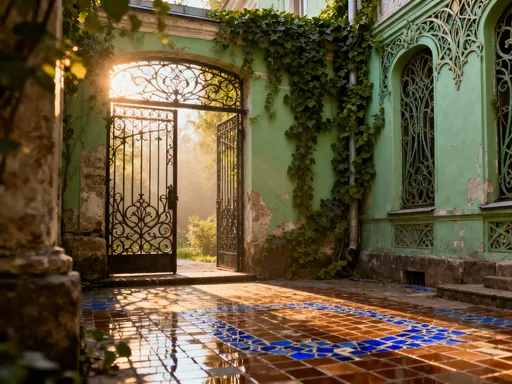
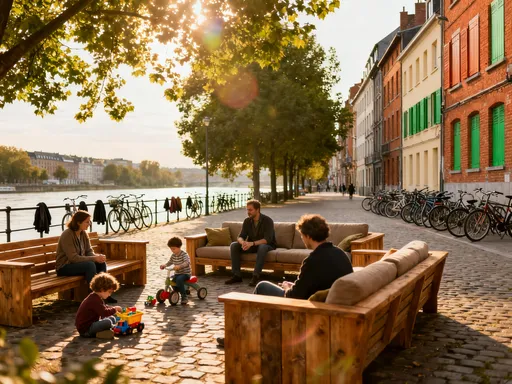
Between the soaring towers of downtown Toronto lie hidden pockets of human-scale design—courtyards, arcades, and alleyways that offer a quiet counterpoint to the city’s fast pace. These spaces are easy to miss, tucked behind unassuming entrances or accessed through narrow passageways, yet they play a vital role in shaping the city’s urban experience. The Toronto Arcade, located just off King Street West, is one such gem. Opened in 1884, it was one of the first indoor shopping arcades in Canada, modeled after European prototypes. Though much of the original structure has been altered over time, its arched walkways and skylit passages still evoke a sense of elegance and intimacy rarely found in modern commercial spaces.
Another overlooked retreat is the Wellington Street Terraces, a series of stepped courtyards tucked behind office buildings near Osgoode Hall. Designed in the early 20th century, these terraces feature Edwardian detailing—wrought iron railings, limestone steps, and symmetrical plantings—that create a sense of order and calm. They were intended as private employee lounges, but today they are accessible to the public during business hours, offering a rare moment of stillness in the heart of the financial district. These spaces demonstrate how thoughtful urban design can prioritize comfort and connection, even in the densest parts of the city.
Toronto’s laneway revitalization program has further enhanced these micro-environments. Once used primarily for deliveries and garbage collection, many downtown alleys have been transformed into vibrant pedestrian corridors. Mercer Street, for example, has been reimagined with colorful murals, string lighting, and café seating, turning what was once a utilitarian passage into a destination in its own right. The city’s official laneway strategy encourages green roofs, permeable paving, and mixed-use development, ensuring that these spaces serve both aesthetic and environmental functions. They provide shade, reduce urban heat, and foster social interaction in ways that wide streets and glass towers cannot.
These hidden spaces are more than just charming anomalies—they are essential to Toronto’s walkability and livability. Studies have shown that cities with diverse, human-scaled public spaces experience higher foot traffic, stronger local economies, and greater community engagement. Toronto’s courtyards and alleys contribute to this dynamic by offering alternative routes, visual interest, and places to pause. They remind us that great urban design isn’t just about grand gestures; it’s about creating moments of delight in the everyday. For the curious traveler, exploring these spaces requires slowing down, stepping off the main drag, and being willing to wander without a destination in mind.
Art Deco Comebacks: When Old Meets Bold
The interwar period left an indelible mark on Toronto’s architectural landscape, particularly in the form of Art Deco buildings that blend elegance with modernity. Though often overshadowed by flashier contemporary designs, these structures have experienced a quiet renaissance in recent years. Their survival is not accidental—dedicated preservation efforts and growing public appreciation have ensured that landmarks like the Bank of Montreal’s downtown branch and the Sun Life Building remain integral to the city’s identity. These buildings are more than relics; they are testaments to a design philosophy that valued craftsmanship, symbolism, and the fusion of tradition with progress.
The Bank of Montreal building at King and Bay Streets, completed in 1937, is a prime example of Art Deco’s enduring appeal. Its limestone façade is adorned with intricate carvings, including eagles, zodiac signs, and classical figures that symbolize commerce, strength, and wisdom. Inside, the banking hall features a coffered ceiling, marble columns, and a bronze teller counter that glimmers under soft lighting. Every detail was designed to inspire confidence and convey stability during a time of economic uncertainty. Today, the space is preserved as part of a larger office complex, allowing visitors to step into a meticulously maintained piece of history without disrupting modern use.
Similarly, the Sun Life Building on University Avenue stands as a monument to both architectural ambition and social optimism. At the time of its completion in 1931, it was the tallest building in the British Commonwealth, a distinction that reflected Toronto’s growing economic importance. Its lobby is a masterpiece of Art Deco design, featuring geometric mosaics, brass inlays, and a celestial ceiling mural that depicts the sun—Sun Life’s namesake—rising over a stylized cityscape. The building underwent a major restoration in the 2010s, which included cleaning decades of grime from its terracotta façade and repairing damaged decorative elements. The result is a building that feels both timeless and renewed.
What makes these Art Deco structures so compelling is their tactile richness. Unlike sleek glass towers, they invite close inspection. Zigzag patterns, sunburst motifs, and stylized flora are carved into stone or cast in metal, rewarding those who take the time to look. Architects working on adaptive reuse projects have been careful to preserve these details while integrating modern systems and accessibility features. The success of these renovations shows that historic preservation and contemporary functionality are not mutually exclusive. In fact, blending old and new can create spaces that are more meaningful and memorable than either could be alone.
Brutalism’s Second Life: From Concrete to Cult Status
Brutalism, once one of the most maligned architectural styles, is experiencing a surprising revival in Toronto. Characterized by its use of raw concrete, massive geometric forms, and functional honesty, Brutalist architecture was widely criticized in the late 20th century for being cold, imposing, and out of touch with human needs. Buildings like Robarts Library at the University of Toronto were nicknamed “Fortress of Knowledge” for their fortress-like appearance. Yet today, a new generation of architects, students, and photographers are rediscovering the beauty in their bold simplicity and social ideals.
Robarts Library, completed in 1973, is perhaps the most iconic example of Brutalism in the city. Its triangular form rises dramatically above the campus, with deep recesses and textured concrete panels that create a play of light and shadow throughout the day. While its exterior may seem austere, the interior has been thoughtfully updated to improve natural lighting, acoustics, and accessibility. Recent renovations have opened up previously封闭 spaces, added study lounges with panoramic views, and introduced warm wood finishes to balance the concrete. These changes have transformed the library from a forbidding monolith into a dynamic hub of academic life.
Another significant Brutalist structure is the former Metro Hall, now part of a larger civic complex near City Hall. Built in the 1980s, it was designed to house municipal offices with an emphasis on transparency and public access. Its stepped façade and open plazas were intended to invite civic engagement, though over time the building fell into disrepair. Recent redevelopment plans aim to convert the structure into a mixed-use facility with community spaces, affordable housing, and government services. This adaptive reuse approach reflects a broader shift in urban thinking—rather than tearing down unpopular buildings, cities are finding ways to repurpose them sustainably.
The renewed appreciation for Brutalism is not just aesthetic; it is also philosophical. These buildings were often constructed during a period of progressive social policy, when governments invested in public education, healthcare, and housing. Their scale and permanence were meant to convey stability and collective purpose. Today, as cities grapple with affordability and climate change, the durability and adaptability of Brutalist structures make them increasingly valuable. They challenge the notion that architecture must be decorative or instantly likable. Instead, they ask us to consider longevity, function, and the role of public institutions in shaping urban life.
Modern Icons with a Human Touch
While Toronto’s architectural heritage is rich, the city continues to evolve through innovative contemporary design. The best of these new buildings do not merely stand out visually—they engage with their surroundings and serve the public good. Two standout examples are the OCAD University’s Sharp Centre for Design and the TIFF Bell Lightbox, both of which demonstrate how modern architecture can be bold without being alienating. Their success lies in a commitment to accessibility, transparency, and community connection.
The Sharp Centre, completed in 2004, is instantly recognizable for its striking “tabletop” design—a bright white box elevated on multicolored pilotis that resemble a pixelated drawing. Designed by British architect Will Alsop, the building was intended to spark creativity and challenge conventional academic architecture. But beyond its visual impact, the design serves practical and symbolic purposes. The elevated structure allows for an open plaza beneath, creating a shaded public space that hosts events, art installations, and student gatherings. The building’s glass façades offer views into studios and classrooms, symbolizing openness and collaboration. For students and visitors alike, the Sharp Centre is not just a place to learn—it’s a statement about the role of art and design in public life.
Similarly, the TIFF Bell Lightbox, home of the Toronto International Film Festival, blends cinematic glamour with urban integration. Its curved glass façades reflect the surrounding skyline while allowing natural light to flood the interior. The ground floor is dedicated to public amenities—a café, gallery space, and multiple cinemas with tiered pricing to ensure accessibility. The building’s design encourages lingering, with open staircases, communal seating, and outdoor terraces that connect to the sidewalk. During festival season, the Lightbox becomes a cultural epicenter, but its year-round programming ensures it remains a neighborhood asset rather than a seasonal spectacle.
What unites these modern icons is their focus on experience over monumentality. They are not designed to be admired from a distance, but to be entered, used, and enjoyed. This human-centered approach reflects a broader trend in Toronto’s architectural philosophy—one that values inclusion, sustainability, and long-term social benefit. As the city grows, these principles will be essential in ensuring that new developments enhance, rather than overshadow, the communities they serve.
Neighborhood Gems: Where Local Character Shines
While downtown Toronto offers a concentration of architectural highlights, some of the city’s most authentic expressions are found in its neighborhoods. Areas like The Junction, Riverdale, and Leslieville have undergone quiet transformations, where old industrial and religious buildings have been thoughtfully repurposed rather than replaced. These changes are often led by local entrepreneurs, artists, and community groups who prioritize character over conformity. The result is a mosaic of spaces that feel lived-in, personal, and deeply rooted in their surroundings.
The Junction, once a hub for manufacturing and rail transport, now thrives as a district of adaptive reuse. Former factories house craft breweries, yoga studios, and independent boutiques, their brick façades preserved while interiors are updated for modern use. One notable example is a converted bakery building that now serves as a co-working space, where exposed beams and original tile floors pay homage to its past. The neighborhood’s main street, Dundas West, retains its early 20th-century streetscape, with awnings, signage, and building heights that create a cohesive and walkable environment. Unlike areas redeveloped by large corporations, The Junction’s evolution has been gradual and community-driven, allowing its identity to emerge organically.
Riverdale, located east of downtown, offers a different kind of architectural charm. Tree-lined streets are lined with Victorian and Edwardian homes, many painted in soft pastels and adorned with intricate wood trim. Repurposed churches have become community centers and performance spaces, their stained glass and steeple silhouettes preserved as landmarks. One former Methodist church now operates as a multidisciplinary arts venue, hosting everything from theater productions to farmers’ markets. The building’s sanctuary, with its high ceilings and natural acoustics, provides a unique setting that no modern auditorium could replicate. These transformations show how architectural preservation can support cultural vitality without freezing a building in time.
What makes these neighborhood gems so special is their attention to detail—the choice of paint color, the restoration of a vintage door, the placement of a single bench under a streetlamp. These small gestures reflect pride and care, qualities that cannot be replicated through large-scale development. For visitors, exploring these areas offers a more intimate understanding of Toronto—not as a global city, but as a collection of distinct communities, each with its own rhythm and aesthetic. Walking through them feels less like sightseeing and more like being welcomed into a neighborhood where history and modernity coexist in harmony.
How to See Toronto Like an Architecture Lover
Appreciating Toronto’s architecture doesn’t require a degree in design or a professional camera. It begins with a simple shift in perspective—learning to look up, behind, and below the obvious. Most tourists keep their eyes forward, focused on destinations, but the city’s most rewarding details are often at roof level or tucked into corners. A slow walking tour, preferably in the early morning or late afternoon when sunlight highlights textures and shadows, can transform an ordinary stroll into a discovery. Start in the St. Lawrence Market neighborhood, where 19th-century commercial buildings with cast-iron columns stand beside modern infill projects that respect the historic scale.
Timing matters. The golden hour—just after sunrise or before sunset—casts a warm glow on brick and stone, revealing details that disappear under harsh midday light. Overcast days, often avoided by photographers, can actually enhance the mood of Brutalist and Gothic structures by softening contrasts and emphasizing form. For those interested in capturing architecture, smartphone apps like “Histories” or “Discover Toronto” can provide background on building names, dates, and architects with a simple scan. Even without technology, a notebook and a willingness to pause can deepen the experience.
Consider creating a self-guided route that connects different eras and styles. Begin with the Victorian row houses of Cabbagetown, then walk to the St. Lawrence Market area to see 19th-century civic architecture. Head west to glimpse the Art Deco details of the Sun Life Building, then continue to the University of Toronto to confront the imposing form of Robarts Library. End at the Sharp Centre or the TIFF Bell Lightbox to see how contemporary design engages with the past. Along the way, take breaks in hidden courtyards, cross through revitalized laneways, and notice how materials change—from sandstone to steel, from terracotta to glass.
Most importantly, allow yourself to be surprised. Toronto does not always announce its treasures. A mural might cover part of a historic wall, or a modern addition might blend so seamlessly with an old façade that you miss the transition. But with patience and attention, the city reveals its layers. You begin to see patterns—the recurrence of red brick, the use of symmetry, the way light interacts with different surfaces. Architecture becomes not just something to look at, but a way of understanding how a city lives, breathes, and remembers.
Toronto’s architecture isn’t just about style—it’s about story. Each brick, beam, and balcony holds a clue to who built it and why. By looking closer, we don’t just see buildings; we see the city’s evolving soul. Go ahead—let your eyes wander upward. You might be surprised what you’ve been missing.