Lost in the Volcanic Soul of the Canary Islands' Architecture
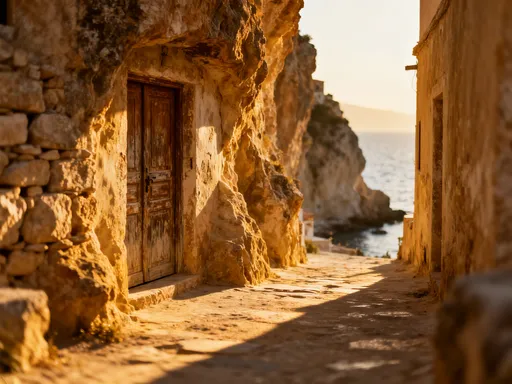
Stepping into the Canary Islands feels like entering a dream where stone whispers stories and buildings breathe history. I never expected architecture to move me so deeply—yet here, volcanic rock meets colonial charm, Moorish echoes blend with modern minimalism. Every alley in La Laguna, every whitewashed village clinging to cliffs—it’s all alive with character. This isn’t just sightseeing; it’s a sensory conversation with centuries of culture, shaped by fire, sea, and soul. The islands’ built environment doesn’t shout for attention; it hums with quiet wisdom, born from necessity, refined by time, and rooted in a deep respect for the natural world. To walk through these towns is to witness how people have lived not against nature, but with it.
First Impressions: When Landscape and Stone Become One
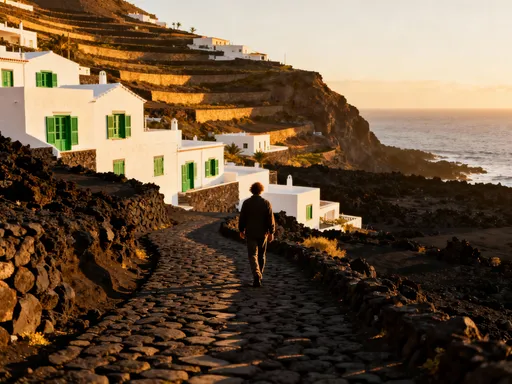
From the moment travelers set foot on the Canary Islands, the land announces itself with unapologetic force. Jagged volcanic peaks rise against cloudless skies, blackened lava fields stretch like frozen waves, and the Atlantic wind carries salt and memory. This is not a gentle landscape—it demands adaptation. And the architecture responds not with defiance, but with harmony. Buildings here do not tower over the terrain; they nestle into it, shaped by centuries of responding to climate, geology, and isolation. The use of piedra negra, or black volcanic stone, is more than aesthetic—it is structural, thermal, and symbolic. Quarried directly from the earth, this dense basalt provides natural insulation, keeping interiors cool in summer and warm in winter. Walls are thick, often exceeding two feet, designed to buffer both heat and wind. Homes are low-slung, their profiles hugging the contours of hillsides, minimizing exposure to storms and preserving sightlines across the horizon.
The color palette of Canarian towns reflects a deliberate dialogue with the environment. Whitewashed walls bounce back the intense sunlight, reducing heat absorption, while window frames and shutters appear in cobalt blue, terracotta red, or sea-green—colors that stand out against the ashen backdrop without clashing. In villages perched on cliffs, such as Taganana in Tenerife or Fuerteventura’s Betancuria, houses seem to grow from the rock itself, their foundations merging with outcrops and lava formations. There is no sharp boundary between built and natural; instead, a seamless transition where architecture feels less constructed and more revealed. This integration is not accidental—it is the result of generations refining techniques passed down through families of masons, carpenters, and farmers who understood that survival depended on working with, not against, the land.
What strikes visitors most is the absence of architectural arrogance. Unlike resort zones elsewhere that impose glass towers on fragile ecosystems, the Canary Islands maintain a visual humility. Building heights are restricted, especially near coastlines, ensuring that no structure dominates the skyline. This restraint preserves the islands’ essence: a place where the horizon remains unbroken, and the sea meets the sky without interference. The result is a built environment that feels timeless, not because it resists change, but because it evolves with intention. Every stone, every window placement, every courtyard layout serves a purpose—providing shade, capturing breeze, or framing a view of the ocean. This is architecture as stewardship, where beauty emerges from function and respect.
Colonial Bones: The Lasting Imprint of Spanish Heritage
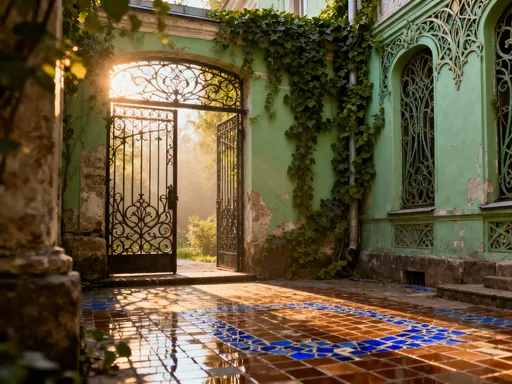
The historic towns of the Canary Islands bear the elegant imprint of Spain’s colonial past, yet they tell a story of adaptation rather than imitation. In San Cristóbal de La Laguna on Tenerife, a UNESCO World Heritage Site, narrow cobblestone streets wind beneath wooden balconies overflowing with geraniums. Houses display ochre, mustard, and rose-tinted facades, their symmetry and proportion echoing the architectural ideals of 16th-century Andalusia. Yet, look closer, and subtle differences emerge. Roofs are steeper than in mainland Spain, designed to channel the islands’ occasional heavy rains. Courtyards—patios—are deeper and more shaded, offering refuge from the sun. Iron grilles on windows are not merely decorative; they filter light and allow airflow while maintaining privacy.
These towns were not mere replicas of Spanish cities but responses to island life. Isolated by thousands of miles of ocean, Canarian builders had to innovate with available materials and climatic conditions. Timber, scarce on the arid islands, was often imported from South America via trade routes, and its arrival marked a turning point in construction. Ceilings in grand homes feature exposed wooden beams, sometimes intricately carved, their warmth contrasting with cool stone walls. These beams supported upper floors and provided structural integrity in a region prone to seismic activity. In Las Palmas de Gran Canaria, the historic district of Vegueta reveals similar patterns—churches with thick buttresses, administrative buildings with central courtyards, and homes with latticed windows that balance ventilation and protection from the sun.
The colonial influence extended beyond aesthetics to urban planning. La Laguna was one of the first cities in the Americas to be laid out in a grid pattern, a model later adopted in New World settlements. Its design prioritized walkability, shade, and social cohesion—qualities that remain relevant today. Unlike rigid European cities built for defense or royal display, Canarian towns evolved around community and climate. Churches stood at central plazas, not as symbols of power, but as anchors of daily life. Markets, fountains, and shaded walkways were integrated into the fabric of the city, creating spaces for gathering and respite. This human-scale planning, born in the 1500s, feels remarkably modern in an era when urban sprawl and car dependency dominate.
What makes this colonial legacy enduring is not nostalgia, but practicality. The same features that protected residents from heat and humidity centuries ago continue to serve modern inhabitants. Thick walls regulate indoor temperatures, shaded patios provide natural cooling, and narrow streets create microclimates that reduce solar exposure. In a world increasingly focused on sustainable design, the Canary Islands offer a living example of passive climate control—achieved long before the invention of air conditioning. These towns are not frozen in time; they are continuously inhabited, their colonial bones adapted to contemporary needs. This continuity speaks to a deeper truth: architecture that respects its context does not become obsolete—it evolves.
César Manrique’s Volcanic Vision: Art Built Into the Earth
No figure has shaped the architectural identity of the Canary Islands more profoundly than César Manrique, the artist-architect from Lanzarote whose vision redefined the relationship between creativity and conservation. Born on the island in 1919, Manrique returned in the 1960s after years abroad and made a radical decision: he would not allow Lanzarote to become another mass-tourism destination stripped of its soul. Instead, he championed a philosophy he called arte y naturaleza—art and nature as inseparable forces. His buildings do not sit on the land; they emerge from it, as if the lava itself had dreamed them into existence.
His most iconic creation, Jameos del Agua, is a masterpiece of integration. Built within a volcanic tunnel formed by the Corona lava flow, the site combines a concert hall, restaurant, and ecological park. Manrique did not impose structure on the cave—he enhanced what was already there. Staircases curve along natural rock formations, pools of saltwater glow under soft lighting, and a colony of blind albino crabs inhabits a carefully preserved grotto. The experience is surreal yet grounded, a testament to how architecture can elevate nature without overpowering it. Similarly, Mirador del Río, perched on a cliff 400 meters above sea level, offers panoramic views of the neighboring island of Graciosa. The viewing platform is embedded into the rock, its concrete forms echoing the surrounding geology. There are no railings to obstruct the vista—only clean lines that guide the eye outward.
Manrique’s influence extended beyond individual projects. He advised local governments on urban planning, advocating for strict building codes that preserved the island’s visual integrity. He insisted on white-washed walls to reflect sunlight, banned high-rise developments, and promoted the use of native materials. These regulations, adopted in the 1980s, remain in effect today and have prevented the kind of unchecked construction seen in other Mediterranean destinations. As a result, Lanzarote retains a cohesive aesthetic—low, earth-toned buildings that blend into the volcanic landscape rather than disrupt it.
His own home, now the Fundación César Manrique, is perhaps the purest expression of his philosophy. Carved into a lava field near Tahíche, the residence consists of five interconnected bubbles formed within solidified volcanic tubes. Windows frame views of cactus gardens and the Atlantic, while indoor and outdoor spaces flow seamlessly. Art and architecture coexist—his paintings hang on stone walls, sculptures emerge from the floor, and every room feels like a carefully composed painting. This was not a house designed for spectacle, but for living in harmony with the environment. Manrique proved that development and preservation are not opposites—they can be partners, when guided by vision and respect.
Traditional Canarian Houses: More Than Just Pretty Facades
Beyond the charm of colorful shutters and flower-filled balconies lies a deep intelligence in traditional Canarian home design. These houses were not built for tourists or photographs; they were crafted for survival, comfort, and community. The patio interior, a central courtyard often paved with stone or tile, is the heart of the home. It provides light to surrounding rooms, captures cooling breezes, and serves as a private outdoor space for family gatherings. In warmer months, meals are prepared and eaten here, shaded by climbing vines or retractable awnings. The patio also plays a crucial role in temperature regulation—its open center allows hot air to rise and escape, while surrounding walls absorb coolness at night and release it slowly during the day.
Windows in these homes are designed with precision. Many feature ventanillas, or double doors, that open outward to maximize airflow. When both panels are open, they create a cross-ventilation effect that draws sea breezes through the house. Shutters, traditionally painted in green, serve both practical and symbolic purposes. The color green is believed to offer protection from evil spirits—a cultural remnant of European folk beliefs—but it also provides a psychological contrast to the black and white of the landscape, creating visual balance. Functionally, wooden shutters block harsh sunlight during the day and provide insulation at night.
Roofs are typically flat, constructed from timber beams covered with volcanic stone and a layer of plaster. This design allows for rainwater collection—a critical feature in an arid climate where water is scarce. Gutters channel runoff into cisterns, where it is stored for household use or irrigation. In rural areas, such systems have sustained families for generations. The thick stone walls, often made from locally quarried basalt, contribute to thermal mass, maintaining stable indoor temperatures year-round. In summer, interiors remain cool even when outside temperatures soar; in winter, they retain warmth from sunlight and cooking fires.
Villages like Firgas on Gran Canaria or Tejeda in Tenerife showcase these homes in their natural setting—clinging to steep slopes, arranged in terraces that follow the contours of the land. Each house is positioned to capture sunlight and views, while shared walls reduce heat loss and conserve space. These settlements were not planned on paper; they grew organically over centuries, shaped by topography, water sources, and social ties. Today, many of these homes have been restored and repurposed as guesthouses or cultural centers, ensuring that their wisdom is not lost. They stand as enduring models of sustainable living—long before sustainability became a trend.
Modern Minimalism Meets Island Identity
Contemporary architecture in the Canary Islands does not reject tradition; it reinterprets it through a modern lens. Today’s architects are responding to new challenges—climate change, energy efficiency, and the demand for comfortable, beautiful living spaces—without sacrificing the islands’ unique character. The best examples of modern design feel inevitable, as if they could exist nowhere else. They use volcanic stone, glass, and concrete not as competing elements, but as complementary materials that honor the past while embracing the future.
On Gran Canaria, eco-resorts are being built into dune systems with minimal disruption to the landscape. Their forms echo the curves of the sand, and their roofs are covered with native vegetation to blend into the surroundings. Large glass walls frame ocean views while sliding doors open to private terraces, blurring the boundary between inside and outside. These structures prioritize natural light and ventilation, reducing reliance on artificial cooling. In some cases, buildings are partially buried to take advantage of the earth’s stable temperature, a technique known as earth-sheltering. Solar panels, discreetly integrated into rooftops, provide renewable energy, while rainwater harvesting systems support landscaping and non-potable uses.
El Hierro, the smallest and westernmost island, has become a pioneer in sustainable architecture. As part of its goal to run entirely on renewable energy, new homes are designed to be energy-positive—generating more power than they consume. These houses align with prevailing winds for natural ventilation and feature triple-glazed windows to minimize heat loss. Their compact layouts reduce energy demand, while thermal mass from stone walls stabilizes indoor climates. Architects work closely with local craftsmen, incorporating hand-carved woodwork, traditional tile patterns, and handmade iron fixtures. This fusion of innovation and tradition ensures that modern buildings do not feel imported; they feel rooted.
What distinguishes Canarian modernism from global minimalism is its sensitivity to place. Unlike generic glass boxes that could sit in any city, these designs respond to specific conditions—sun angles, wind patterns, views, and cultural memory. A villa on La Palma might feature a rooftop terrace oriented toward the volcano, while a home in Lanzarote could include an interior courtyard planted with endemic succulents. Even in new developments, building heights are kept low, and materials are locally sourced whenever possible. This approach ensures that progress does not erase identity. Modernity here is not about erasing the past, but about continuing a conversation—one that values light, air, and connection to the earth.
Hidden Villages: Where Time Stands Still in Stone
Away from the coastal resorts and bustling towns, the Canary Islands harbor quiet villages where time seems to pause. Places like Arure on La Gomera, Los Silos on Tenerife, or El Paso in La Palma offer a glimpse into a slower, more grounded way of life. Here, architecture is not curated for visitors; it is shaped by necessity, tradition, and the rhythm of rural existence. Stone mills, once used to grind grain, stand beside ancient chapels with simple bell towers. Goat-herder huts, built from dry stone without mortar, dot misty ravines, their roofs covered with lichen and moss. These structures were not built to last for show—they were made to serve, and many still do.
The dry-stone walls that snake across hillsides are among the most remarkable features of these inland settlements. Constructed without cement, they rely on careful stacking and balance to endure decades of wind and rain. These walls serve multiple purposes: they prevent soil erosion on steep slopes, define property boundaries, and create microclimates for crops like bananas, potatoes, and vines. In some areas, they form intricate networks that resemble living lace across the landscape. Local farmers continue to maintain them using techniques passed down through generations, often repairing sections damaged by storms or landslides. This knowledge is not written in manuals—it is carried in memory and hands.
Walking through these villages, one senses a different relationship between people and place. Houses are clustered near water sources, their layouts dictated by access to springs or aqueducts. Paths follow natural contours, winding through groves of laurel or pine. There are no straight lines imposed by planners—only organic growth shaped by survival and community. In Arure, a village nestled in a lush valley, homes are built into the hillside, their terraced gardens cascading downward. The church, small and unadorned, stands at the center, a reminder of shared faith and history. Life here moves at the pace of seasons, not schedules.
These hidden settlements are not museums frozen in time; they are living communities adapting to change while preserving their essence. Some younger residents have left for cities, but others are returning, drawn by the peace, beauty, and opportunity to live differently. Small guesthouses, artisan workshops, and organic farms are revitalizing these areas, offering alternatives to mass tourism. By visiting these villages with respect and curiosity, travelers can experience a deeper layer of Canarian culture—one that values silence, simplicity, and the quiet dignity of stone and soil.
Why This Architecture Matters—And How to Experience It Deeply
The architecture of the Canary Islands is more than a collection of beautiful buildings; it is a testament to resilience, identity, and harmony with nature. In an age of climate crisis and cultural homogenization, these islands offer a powerful alternative: a model of living that is sustainable, rooted, and soulful. Every wall, courtyard, and rooftop tells a story of adaptation—of people who listened to the land and built accordingly. This is not architecture for spectacle, but for life. It teaches that comfort does not require excess, that beauty can arise from necessity, and that homes can be both functional and poetic.
To truly appreciate this legacy, visitors must go beyond surface-level tourism. Skip the crowded bus tours and air-conditioned coaches. Instead, rent a bicycle and explore La Palma’s mountain roads, stopping in villages where elders sit outside their homes, watching the world pass by. Hike the trails of Teno Rural Park, where stone paths lead to abandoned hamlets reclaimed by nature. Spend an afternoon in a 19th-century courtyard in Las Palmas, sipping coffee while listening to the trickle of a fountain. These moments of stillness allow the architecture to speak—not through plaques or guides, but through presence and atmosphere.
Engage with local builders and artisans. Visit a workshop where volcanic stone is shaped by hand, or attend a demonstration of traditional carpentry. Stay in a restored casona, a historic manor house turned boutique inn, where thick walls and high ceilings create a sanctuary from the heat. Talk to owners about the challenges and rewards of preserving old buildings. These conversations reveal the living nature of Canarian architecture—it is not a relic, but a practice, continuously maintained and reimagined.
In a world dominated by glass towers and disposable design, the Canary Islands remind us that buildings can have soul. They can carry memory, respond to light and wind, and foster connection. They can be humble and powerful at once. To walk through these islands is to remember that home is not just a shelter, but a conversation—one between earth, history, and the human spirit. And in that conversation, we find not only beauty, but belonging.