You Won’t Believe What This Desert Capital Hides
Nouakchott, Mauritania — not your typical city escape. Sandwiched between the Atlantic and the Sahara, it’s raw, real, and rarely explored. I wandered its dusty streets, watched fishermen haul in the morning catch, and saw sunsets that painted the skyline in fire. This isn’t a polished tourist hub, but its cityscape? Absolutely unforgettable. If you're craving authenticity over comfort, let me show you the side of Nouakchott most travelers never see — quiet alleys, local rhythms, and urban beauty in the most unexpected places.
Arrival: First Impressions of a Desert Metropolis
Touching down at Nouakchott–Oumtounsy International Airport, the first thing you notice is the light — a pale, golden haze that blankets everything, softening edges and casting long shadows across the tarmac. The heat rises in visible waves from the asphalt, and within moments of stepping outside, the dry air settles on your skin like a warm veil. The city unfolds in low silhouettes against the horizon, buildings hugging the earth as if to resist the wind. This is not a skyline of glass and steel, but one of sand-colored concrete, corrugated metal roofs, and wide, open spaces where sand often reclaims the margins of roads. The contrast between expectation and reality is immediate. Many arrive anticipating a dusty backwater, but what reveals itself is a city of quiet dignity, shaped by resilience and adaptation.
Nouakchott’s layout reflects a blend of influences — French colonial planning, Arab urban traditions, and indigenous Sahelian patterns. Broad boulevards like Avenue Gamal Abdel Nasser stretch in straight lines, remnants of mid-20th century design, yet they are frequently interrupted by informal markets, parked donkey carts, or sudden clusters of roadside tea stalls. There is minimal traffic, a rarity in most capital cities, and the pace of movement feels unhurried, almost meditative. The city does not rush; it breathes. Sand dunes line parts of the outskirts, sometimes spilling onto sidewalks, a constant reminder of the Sahara’s quiet encroachment. Yet, life persists — children kick soccer balls near makeshift goalposts, women in colorful moubas walk with purpose, and merchants call out in Hassaniya Arabic, Wolof, or French.
What strikes most is the absence of urban noise. No blaring horns, no constant construction clamor — just the occasional hum of a motorbike or the distant call to prayer from a local mosque. The architecture, though modest, carries a certain harmony. Buildings are low-rise, rarely exceeding three stories, with thick walls that insulate against the heat. Many homes feature inward-facing courtyards, a design rooted in both privacy and climate control. The city’s color palette is muted — beige, white, ochre — a natural response to its environment. There is no attempt to impress; instead, there is a quiet pride in simply enduring, in existing on the edge of two powerful forces: the ocean and the desert.
The Pulse of the Coast: Port and Fishing Districts
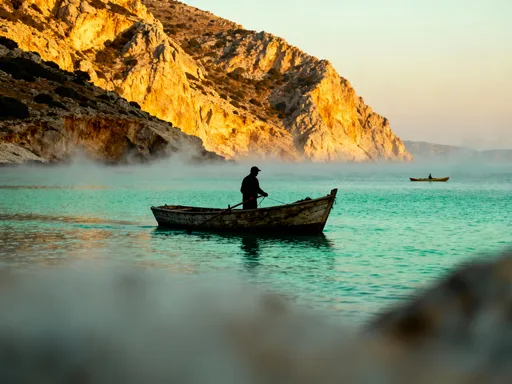
The soul of Nouakchott beats strongest along its coastline, where the Atlantic meets the city’s daily rhythm. The port area, particularly around the artisanal fishing zone near the southern edge of the city, is a place of raw energy and unfiltered life. Long before sunrise, the shore comes alive with activity. Wooden pirogues, painted in bright blues, greens, and reds, are dragged from the sand into the surf. Fishermen, their faces weathered by sun and salt, work in practiced silence, preparing nets and checking engines. The air carries the sharp tang of brine, mingled with the earthy scent of damp ropes and drying fish. This is not a tourist spectacle — it is work, hard and essential, and it sustains the city.
By early morning, the fish auctions begin. Buyers — often women in headscarves and long dresses — move from boat to boat, inspecting the catch with experienced eyes. Tuna, mackerel, sardines, and octopus are laid out on plastic sheets, glistening under the rising sun. Prices are negotiated quickly, voices rising and falling in rapid exchanges. The market operates on trust and routine; there are no scales in sight, yet transactions proceed smoothly. These women, many of whom run small street stalls or supply local restaurants, are the backbone of the city’s food economy. Their presence underscores a quiet matriarchal strength, often overlooked but deeply embedded in daily life.
The docks themselves are simple — not grand concrete piers, but wooden planks laid over sand, reinforced with stone and scrap metal. They are functional, not designed for aesthetics, and they bear the marks of time and tide. Yet, they serve their purpose. Every day, hundreds of tons of fish are landed here, feeding not just Nouakchott but inland towns as well. The resilience of the fishermen is evident in their routines — they face unpredictable weather, aging boats, and fluctuating fish stocks, yet they return to sea each night. Their lives are dictated by the ocean’s moods, and their work shapes the city’s identity. To stand on the shore at dawn is to witness a cycle older than the city itself — one of effort, sustenance, and quiet perseverance.
Urban Contrasts: Government Zones vs. Residential Neighborhoods
Just a few kilometers from the bustling port lies a different side of Nouakchott — the government quarter, where order and formality take precedence. Here, wide avenues are lined with low-rise administrative buildings, their facades clean and unadorned. Ministries, embassies, and public offices sit behind iron gates, guarded by uniformed personnel. The architecture is functional, echoing French modernist influences, with flat roofs, shuttered windows, and minimal ornamentation. This part of the city feels deliberate, planned, and somewhat detached from the organic sprawl that defines most of Nouakchott.
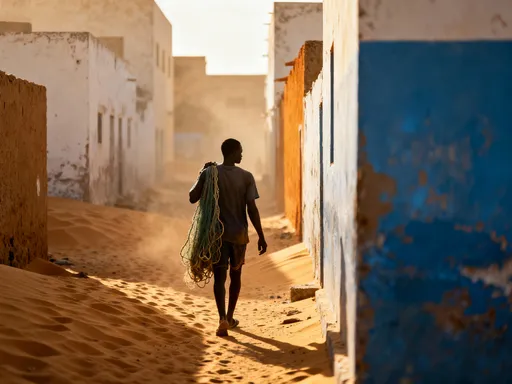
In contrast, residential neighborhoods like Tevragh-Zeina, Teyarett, and Ksar grow outward in a more spontaneous manner. Streets curve and narrow, homes cluster together, and space is used with ingenuity. Walls are often whitewashed, roofs made of corrugated iron, and doorways decorated with simple geometric patterns. Water is scarce, and electricity can be unreliable, yet life thrives. Families gather in shaded courtyards, children play in alleys, and neighbors share tea in the cool of the evening. These neighborhoods reflect a blend of tradition and adaptation — homes may have satellite dishes and solar panels, but interiors often follow age-old layouts centered around communal spaces.
Urban planning in Nouakchott has struggled to keep pace with rapid population growth. Once a small coastal village, the city has swelled to over one million residents, many arriving from rural areas in search of opportunity. This influx has led to informal settlements on the outskirts, where basic infrastructure is still developing. Yet, even in these areas, there is a sense of community and self-organization. Residents build with what is available — sand-colored concrete blocks, recycled metal, and handmade bricks. Green spaces are rare, but where they exist — a small park, a shaded square — they become vital gathering points. The contrast between the government zone and the residential districts is not just architectural; it reflects the dual nature of the city itself — one of official order and grassroots resilience.
Markets as City Landmarks: Beyond Shopping
In Nouakchott, markets are not just places to buy goods — they are the living rooms of the city, where social life unfolds in full color and sound. Marché Capitale, the central market, is a labyrinth of narrow alleys packed with stalls selling everything from fresh produce to handmade sandals. The air is thick with the scent of cumin, dried peppers, and leather. Bolts of fabric in vibrant indigo, saffron, and emerald hang like banners overhead. Women bargain with vendors, their voices rising in playful negotiation, while men carry sacks of rice or bundles of firewood on their shoulders.
Marché Populaire, slightly less formal, offers a more grassroots experience. Here, goods are displayed on the ground or on wooden crates, and prices are often lower. It is a place of improvisation — a vendor might use a car tire as a stool, or drape a tarp overhead for shade. The market operates on rhythm and routine. Early mornings bring farmers from nearby villages, selling okra, millet, and dates. By midday, the crowds thicken, and by late afternoon, the pace slows as vendors pack up their wares. These markets are not just economic hubs; they are social engines, where news is exchanged, relationships are built, and culture is preserved.
The visual and sensory identity of Nouakchott is shaped by these spaces. They are chaotic yet harmonious, overwhelming yet navigable. A first-time visitor might feel disoriented, but with time, patterns emerge — certain stalls always sell the same goods, certain alleys lead to specific sections, and certain faces become familiar. The market is a microcosm of the city itself: diverse, resilient, and deeply human. To walk through it is to understand how life in Nouakchott is not just endured but celebrated — in the clatter of pots, the rustle of fabric, and the laughter of children weaving between stalls.
Green Sparks in the Dust: Parks and Public Spaces
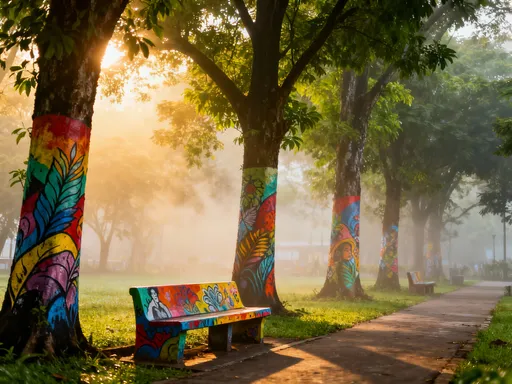
In a city where sand often overtakes sidewalks and water is rationed, green spaces are rare and cherished. Yet, they exist — small oases of life in an arid landscape. Parc National du Banc d’Arguin may be famous for its coastal wildlife, but within the city, smaller green areas serve as vital respites. Place du 28 Novembre, near the presidential palace, offers a few shaded benches and a scattering of acacia trees. Children play football on patches of grass, elders sit in quiet conversation, and couples stroll along gravel paths. It is not a manicured garden, but it is loved.
Neighborhood squares, often nothing more than a cleared area with a few trees, function as informal community centers. In Tevragh-Zeina, a cluster of date palms provides shade for a group of men playing checkers on a handmade board. In Ksar, a small playground with a rusted swing set draws families in the late afternoon. These spaces are maintained not by city crews but by residents — someone waters the grass by hand, another sweeps the path, another hangs a string of lights for evening gatherings. The effort is collective, a quiet act of care in a challenging environment.
Efforts to expand urban greenery are slowly gaining momentum. Local NGOs and municipal programs have introduced drought-resistant plants and launched tree-planting initiatives. Solar-powered irrigation systems are being tested in pilot projects. These may seem small, but their impact is significant. Green spaces improve air quality, reduce heat, and foster social cohesion. They offer a place for children to play safely, for families to gather, for individuals to find peace. In a city shaped by scarcity, these patches of green are not luxuries — they are necessities. They remind residents and visitors alike that beauty and community can flourish even in the most unlikely places.
Nightscapes: When the City Softens
As the sun sets behind the dunes, Nouakchott transforms. The harsh light fades, the temperature drops, and the city exhales. Streets that buzzed with activity during the day grow quieter. Fewer cars pass, and the air carries the soft murmur of conversation. Families emerge from their homes, carrying mats and stools to sit outside, catching the evening breeze. In the absence of bright streetlights, the darkness is deep, punctuated only by the glow of lanterns, phone screens, and the occasional generator.
The moon casts silver light on sandy alleys, turning them into ribbons of quiet beauty. Shadows stretch long, and the outlines of buildings blur into the night. In this stillness, the city feels intimate, almost tender. The constant hum of daytime life gives way to a slower rhythm — the clink of tea glasses, the crackle of a radio, the distant strum of a lute. Music drifts from a courtyard, laughter echoes down a lane. It is in these moments that Nouakchott reveals a different kind of poetry — not in grand monuments, but in the quiet rituals of ordinary life.
Nighttime also highlights the city’s fragility. Power outages are common, and when the grid fails, neighborhoods rely on generators, their low rumble a reminder of infrastructure limitations. Yet, there is no panic — life continues. Candles are lit, meals are shared, stories are told. The darkness does not frighten; it comforts. It brings people closer, literally and figuratively. To walk through Nouakchott at night is to witness a city that does not perform for outsiders — it simply lives, in its own time, in its own way.
Why Nouakchott’s Cityscape Matters — And Who It’s For
Nouakchott is not a destination for those seeking luxury resorts or curated experiences. It does not offer the ease of well-marked trails or the comfort of tourist zones. Instead, it offers something rarer: authenticity. This is a city untouched by mass tourism, where daily life unfolds without performance or pretense. Its beauty is not in perfection, but in persistence — in the way homes rise from the sand, in the rhythm of the fishing boats, in the laughter that spills from courtyards at dusk.
The traveler who finds meaning here is one who values depth over convenience, curiosity over comfort. It is for those who understand that not all cities must be polished to be profound. Nouakchott teaches resilience — not as a concept, but as a lived reality. It shows how communities adapt, how culture endures, and how dignity can exist without spectacle. In a world where many destinations are shaped by tourism dollars, Nouakchott remains unapologetically itself.
Experiencing such a place broadens understanding. It challenges assumptions about what a city should look like, how it should function, and who it is for. It reminds us that urban beauty is not limited to skylines or historic centers — it can be found in a shaded courtyard, a morning fish auction, or a child’s swing under a palm tree. Nouakchott does not ask to be admired from a distance. It invites presence, patience, and openness. And for those willing to look beyond the surface, it offers a quiet, lasting reward — the rare gift of seeing a city, and the people within it, as they truly are.